

You just pulled up soaked boxes from your basement floor, and now you’re staring at standing water wondering how long this nightmare lasts. Basement flood cleanup isn’t one fixed timeline. It ranges from 3 days for a minor clean-water leak to 4 weeks for major sewage contamination. The difference comes down to how dirty the water is, how much damage it caused, and whether you’ve got bare concrete or a finished space with carpet and drywall that soaks everything up like a sponge.
Basement Flood Cleanup Timeline: What to Expect from Start to Finish

Basement flood cleanup takes anywhere from 24 hours to several weeks depending on how bad the damage is. Got just an inch or two of clean water from a small leak? You’re probably looking at 3 to 5 days. Major flooding with several feet of contaminated water sitting in your basement? That can take 2 to 4 weeks or more before everything’s fully restored and safe to use again.
The timeline breaks down into stages that overlap and move at different speeds. Water removal usually takes 1 to 2 days once equipment shows up. Drying and dehumidification runs for 3 to 7 days with industrial equipment going around the clock. Repairs add another few days to several weeks depending on what needs replacing. A flooded basement with trashed drywall, ruined carpet, and soaked insulation obviously takes longer than one with just wet concrete floors.
Two things matter most: how contaminated the water is, and how much damage it caused. Clean water from a broken supply line dries faster and needs less sanitization than sewage backup. Professional restoration services also finish way faster than DIY attempts because they’ve got the right equipment and know exactly what to do first.
Four Critical Stages of Basement Flood Cleanup and Their Duration

Basement flood cleanup follows a specific process with phases that sometimes overlap but always happen in a certain order for safety reasons.
Stage 1: Emergency Response and Water Removal (1 to 2 Days)
Professional teams usually respond within 1 to 4 hours of your call. They start with a safety check, shutting off electricity to flooded areas, looking for structural hazards, identifying the water source. Water extraction begins immediately using industrial pumps for deep standing water and wet vacuums for what’s left. Most water removal finishes within the first day, though basements with several feet of water or tough access might take up to 2 days. Speed matters here. Every hour water sits increases damage to materials and raises mold risk.
Stage 2: Drying and Dehumidification (3 to 7 Days)
Once standing water’s gone, industrial dehumidifiers and air movers take over. These machines run continuously, pulling moisture from surfaces and the air itself. Professionals use moisture meters to track progress in floors, walls, and other materials, taking readings every 24 hours. Things aren’t dry when they look dry. Concrete, wood, and drywall hold moisture internally that takes days to evaporate. Most basements reach acceptable moisture levels in 3 to 5 days, but heavily saturated materials or humid weather can push this to 7 days or longer.
Stage 3: Cleaning and Sanitization (1 to 2 Days)
After drying, every surface that touched floodwater gets deep cleaned. Professionals apply antimicrobial treatments to prevent mold growth and use hospital grade disinfectants to remove contaminants. This stage matters most with gray or black water contamination. Clean water floods need basic cleaning, but sewage backups demand intensive sanitization that can take 2 full days. Corners, crevices, floor joints, and wall bases all get treated because missed moisture pockets create mold problems weeks later.
Stage 4: Repairs and Restoration (Days to Weeks)
Minor repairs like replacing baseboards, carpet padding, or small sections of drywall take just a few days. You’re looking at 3 to 5 days for straightforward material replacement. Major reconstruction involving new subfloors, extensive drywall work, cabinet replacement, or structural repairs stretches into several weeks. A finished basement with significant flood damage might need 2 to 3 weeks of reconstruction work after drying completes. The extent of damage discovered during drying determines this timeline. Sometimes you don’t know how much reconstruction you need until walls and floors are completely dry.
Critical Factors That Determine Basement Flood Cleanup Duration

No two basement floods follow identical timelines. One person might have a dry, restored basement in 4 days while another waits 3 weeks for the same amount of water.
Several factors determine whether your cleanup takes days or weeks, but water contamination level matters most. The difference between clean water and sewage isn’t just smell. It’s a completely different restoration process with different safety protocols, cleaning requirements, and timelines.
Category 1: Clean Water (Fastest Cleanup, 3 to 5 Days)
Clean water comes from broken supply lines, water heater leaks, or sink overflows. It’s got no sewage or chemical contamination. Cleanup focuses almost entirely on extraction and drying since sanitization requirements are minimal. Most Category 1 floods in unfinished basements resolve in 3 to 4 days. Finished basements with carpet and drywall take 4 to 5 days because porous materials need more drying time. You’re not dealing with health hazards here. Just moisture that needs to go away before it causes mold or structural damage.
Category 2: Gray Water (Moderate Cleanup, 5 to 10 Days)
Gray water comes from washing machines, dishwashers, toilet tanks (no feces), or sump pump backups. It’s got some contamination like soap, detergent, food particles, or mild bacteria. Cleanup requires thorough disinfection beyond simple drying. Professionals use stronger cleaning agents and more protective equipment. Everything the water touched gets sanitized, not just dried. This adds 2 to 3 days to the timeline compared to clean water. Expect 5 to 7 days for basic gray water cleanup in an unfinished basement, 7 to 10 days if you’ve got finished spaces with drywall and flooring that absorbed contaminated water.
Category 3: Black Water (Longest Duration, 2 to 4 Weeks or More)
Black water comes from sewage backups, toilet overflows with feces, or exterior flooding that brings in ground contaminants. This is a serious health hazard containing bacteria, viruses, and potentially dangerous pathogens. Cleanup requires full protective equipment, specialized disposal procedures, and intensive antimicrobial treatments. Every porous material that absorbed black water typically needs removal and disposal. You can’t just clean it. Drywall that touched sewage gets cut out and replaced. Carpet and padding go straight to the dumpster. The sanitization phase alone takes 3 to 5 days. Total timeline runs 2 to 3 weeks for moderate black water floods, 4 weeks or more for extensive contamination with significant material replacement.
The amount of standing water and flood depth also directly impact duration. A basement with 2 inches of water dries in half the time as one with 12 inches. Affected materials matter too. Concrete and tile dry much faster than wood, drywall, and carpet. Basement size plays a role since larger square footage requires more equipment and longer drying cycles. Finished basements with lots of porous materials always take longer than bare concrete spaces. And if water sat for days before cleanup started, you’re looking at more damage, more material replacement, and a longer timeline. But across all these variables, water contamination level remains the single greatest factor in how long you’ll wait for a dry, safe basement.
Material Types, Environmental Conditions, and Their Combined Impact on Drying Time

Material composition and ambient conditions work together to determine drying duration. They’re not separate factors.
Porous materials absorb water like a sponge and release it slowly over days. Non-porous surfaces like concrete, tile, or metal shed water quickly and dry in 24 to 48 hours with proper air circulation. Drywall is one of the worst offenders. It soaks up water extensively and often swells, crumbles, or grows mold before it can fully dry. Water damaged drywall typically needs replacement rather than drying, which adds reconstruction time. Carpet padding acts like a soaked sponge and almost always requires removal. The carpet itself might dry and get salvaged, but the padding underneath stays wet and grows mold within days.
Finished basements with drywall, carpet, and wood take significantly longer than unfinished concrete basements. You’re looking at 5 to 7 days for a finished space versus 3 to 4 days for bare concrete walls and floors. Wood absorbs moisture and takes time to release it without warping. Hardwood flooring might need 7 to 10 days of careful drying to avoid cupping and buckling. Tile floors, on the other hand, dry quickly. The tile itself doesn’t absorb water, though the grout and subfloor underneath might still hold moisture.
Ambient humidity and temperature significantly impact evaporation rates regardless of material type. Warm, dry summer air pulls moisture out of materials faster than cold, damp winter air. Summer flooding in a dry climate might resolve in 3 to 5 days while the same flood in winter or in a humid climate could take 7 to 10 days or more. High humidity slows evaporation by keeping the air already saturated with moisture. There’s nowhere for water in your basement materials to go. Professionals combat this with industrial dehumidifiers that forcibly extract moisture from the air, creating optimal drying conditions regardless of outside weather. Basements naturally have poor ventilation since they’re underground with limited windows and air movement. This makes mechanical air circulation essential. Without air movers pushing air across wet surfaces, moisture just sits there, especially in corners and along floor-wall joints where air doesn’t naturally flow.
| Material Type | Typical Drying Time | Environmental Impact | Replacement Likelihood |
|---|---|---|---|
| Concrete floors | 2 to 4 days | Low, dries quickly in most conditions | Very low, usually salvageable |
| Drywall | 5 to 7 days | High, humidity significantly extends drying | High, often needs replacement if saturated |
| Carpet and padding | 4 to 6 days for carpet, padding usually discarded | Moderate, humid conditions slow drying | High for padding, moderate for carpet |
| Hardwood flooring | 7 to 10 days | Very high, must dry slowly to prevent warping | Moderate, depends on water exposure duration |
| Tile flooring | 2 to 3 days | Low, surface dries quickly, subfloor takes longer | Low, tile rarely damaged, grout may need repair |
Professional Restoration vs. DIY: Timeline Comparison and When to Hire Experts
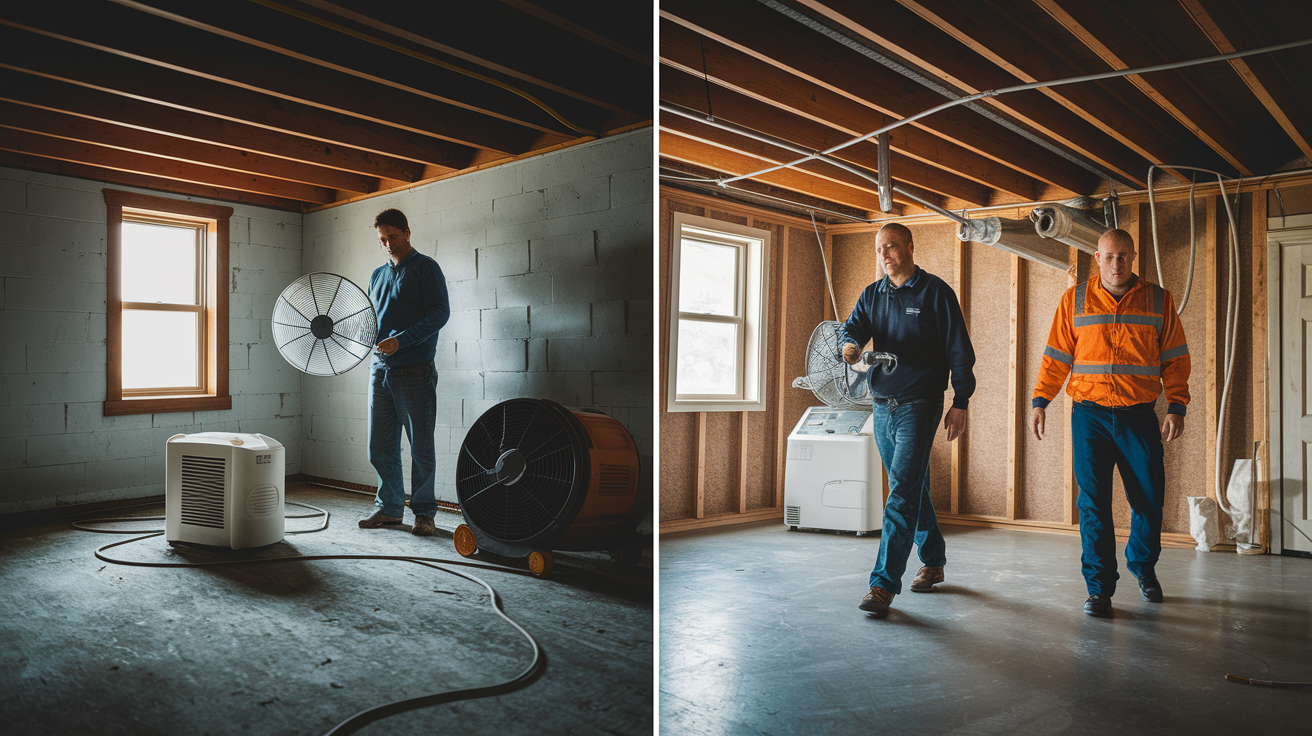
The decision between professional restoration services and DIY cleanup directly impacts how long you’ll live with a damaged basement.
Professional restoration companies complete most basement flood cleanups in 3 to 7 days from first response to final drying confirmation. They arrive with industrial grade dehumidifiers that pull 10 times more moisture than household units, air movers that create continuous air circulation, and moisture detection technology like thermal imaging cameras that spot hidden water you can’t see. Equipment runs 24/7 with techs monitoring progress and adjusting placement every day. They know exactly where moisture hides. Inside wall cavities, under baseboards, in subfloors. And they track it with moisture meters until readings match unaffected areas. Speed matters because every day of moisture exposure increases damage. Professionals also provide detailed documentation with photos, moisture readings, and equipment logs that insurance companies accept without argument.
DIY cleanup typically takes 1 to 3 weeks for the same flood. Household dehumidifiers work, but slowly. You’re emptying the water tank twice a day and moving the unit around trying to cover a whole basement. Box fans help but don’t create the directed airflow that industrial air movers provide. You’re also learning as you go, figuring out where to put equipment, how long to run it, whether surfaces are actually dry or just feel dry. The biggest risk is incomplete drying. Moisture trapped in materials creates mold problems 2 to 3 weeks later, requiring a second round of remediation that takes another week and costs more than hiring pros initially. DIY works for very minor clean water incidents. Maybe a small leak that created 1 inch of water in an unfinished basement with concrete floors. Anything beyond that exceeds what household equipment can handle efficiently.
Some flood situations exceed safe DIY capabilities and require professional intervention regardless of cost concerns:
Any contaminated water including sewage, exterior flooding, or gray water from appliances requires professional grade sanitization and protective equipment you don’t own. Flooding deeper than 2 inches in finished basements with drywall and carpet overwhelms household drying equipment. Water affecting electrical systems, outlets, or HVAC equipment creates electrocution risks that require licensed electricians and restoration pros. Mold already visible or strong musty odors present mean contamination has started and needs professional antimicrobial treatment. Structural concerns like foundation cracks, sagging floors, or damaged support beams require engineering assessment before cleanup begins. Insurance claim involvement requiring professional documentation and certification that validates damage for claim approval.
Professionals complete work in 3 to 10 days compared to 2 to 3 weeks DIY, making the investment worthwhile for most basement floods beyond minor clean water incidents. Time saved, mold risk reduced, and proper insurance documentation typically justify the cost. For contaminated water situations, anything involving sewage or exterior flooding, professional help isn’t optional. It’s mandatory for health and safety. To learn more about what the complete restoration process involves, check out our Water Damage Recovery: Your Step-by-Step Restoration Guide After Home Flooding.
Mold Prevention Timeline: Immediate Actions That Prevent Extended Cleanup Duration

The EPA recommends addressing water damage within 24 to 48 hours to prevent mold growth. This isn’t a suggestion. It’s the window you have before mold spores settle into wet materials and start colonies.
Actions taken in the first few hours directly impact total cleanup duration. Immediate response keeps cleanup within the standard 3 to 7 day drying timeline. Delayed response allows mold to establish, requiring separate remediation that adds 3 to 7 days or more to your timeline and significantly increases costs. Mold remediation involves containment barriers, air filtration, specialized cleaning, and often material disposal that wouldn’t be necessary if you’d started drying within that first 24 to 48 hour window.
Shut off electricity to flooded areas immediately at the breaker box. Don’t just unplug devices or turn off light switches since water creates electrocution risks through walls and floors. Stop the water source if possible by turning off the main water valve, fixing the leak, or addressing the sump pump failure causing the flood. Remove standing water within the first 24 hours using whatever equipment you have available. Wet vacuums, mops, buckets. While waiting for professional equipment. Move salvageable furniture and contents out of the water to prevent further absorption and create clear working space. Open windows and doors for ventilation if weather permits and outdoor humidity is lower than indoor humidity. Document damage with photos and videos for insurance purposes before you start moving things or extracting water. Contact a professional restoration company within the first 24 hours even if you plan to start water removal yourself while they’re en route.
Proper immediate response can reduce your total timeline by 30 to 50%. A flood that would take 10 days with delayed response might complete in 6 to 7 days if you act within hours. Calling professionals early doesn’t mean sitting and waiting. You can start water removal immediately while they’re driving to your location. Every gallon you remove before they arrive is progress.
Preventive measures during cleanup also prevent timeline extensions. Antimicrobial treatments applied early kill mold spores before they establish. Proper ventilation and humidity control stop new moisture from accumulating. Running dehumidifiers continuously instead of intermittently prevents the daily moisture rebound that extends drying. For a complete guide on preventing mold during the critical first 48 hours, see our article on How to Prevent Mold After Water Damage: Quick-Start Protection Guide. These steps don’t just prevent health problems. They prevent the timeline from doubling because you have to stop, remediate mold, then restart drying.
Insurance Claims and Documentation: Hidden Timeline Factors in Flood Cleanup

Insurance coordination can extend your overall project timeline even when the physical restoration work progresses normally. The cleanup itself might take 7 days, but insurance processes can add another week to final completion.
Initial claim filing and adjuster scheduling typically takes 1 to 3 days. You file immediately, but the adjuster needs to schedule a site visit around their workload. Damage assessment and approval process adds another 2 to 5 days after the adjuster visits, photographs damage, and submits their report for review. Scope agreement between your restoration company and insurance adjuster sometimes requires negotiation if they disagree on what repairs are necessary versus what can be cleaned. Payment processing and authorization delays can hold up material orders or contractor scheduling even when everyone agrees on the scope. Supplemental claims become necessary if hidden damage is discovered after drywall removal or floor tear-out, restarting parts of the approval process.
Professional restoration companies handle insurance documentation which typically prevents delays rather than causing them. They know exactly what photos, moisture readings, and written descriptions insurance adjusters need to approve claims quickly. They speak the language adjusters understand and provide documentation in formats that match insurance company requirements. DIY approaches often face longer claim processing times because homeowners don’t know what documentation to collect, take the wrong photos, or miss damage details that adjusters need to see. An incomplete initial claim gets kicked back for more information, adding days or weeks to approval.
Complete Drying Confirmation: How to Know Basement Flood Cleanup Is Finished

Surfaces that look and feel dry don’t equal complete moisture removal. You can’t see moisture that’s still trapped inside drywall, under flooring, or within concrete.
Professional verification methods use technology instead of visual assessment. Moisture meters with pins that penetrate surfaces measure moisture content as a percentage. Thermal imaging cameras show temperature differences that reveal wet spots hidden behind walls or under floors where cooler temperatures indicate retained moisture.
Moisture meter readings match unaffected baseline areas in the same materials (typically 12 to 15% for wood, 0 to 1% for drywall, 4 to 6% for concrete). No musty odors present when you walk into the basement or open closet doors. Surfaces feel completely dry to touch with no cool dampness or tacky feeling. Humidity levels return to normal range between 30% and 50% on a hygrometer. No visible water stains, discoloration, or efflorescence on concrete surfaces.
Professionals use moisture meters and thermal imaging to detect hidden moisture in walls, floors, and structural elements before declaring cleanup complete. They take readings in multiple locations, not just one spot, and compare them to unaffected areas upstairs or in dry sections of the basement. Drywall might read dry on the surface but show 20% moisture content 2 inches into the panel. Concrete floors might feel dry but retain moisture in the slab that takes an additional 2 days to release. Equipment keeps running until measurements confirm complete drying, not when things look ready. This verification process prevents the most common DIY mistake: stopping too early because everything seems fine, then discovering mold growth 3 weeks later when hidden moisture finally surfaces.
Real-World Basement Flood Cleanup Scenarios and Actual Timelines
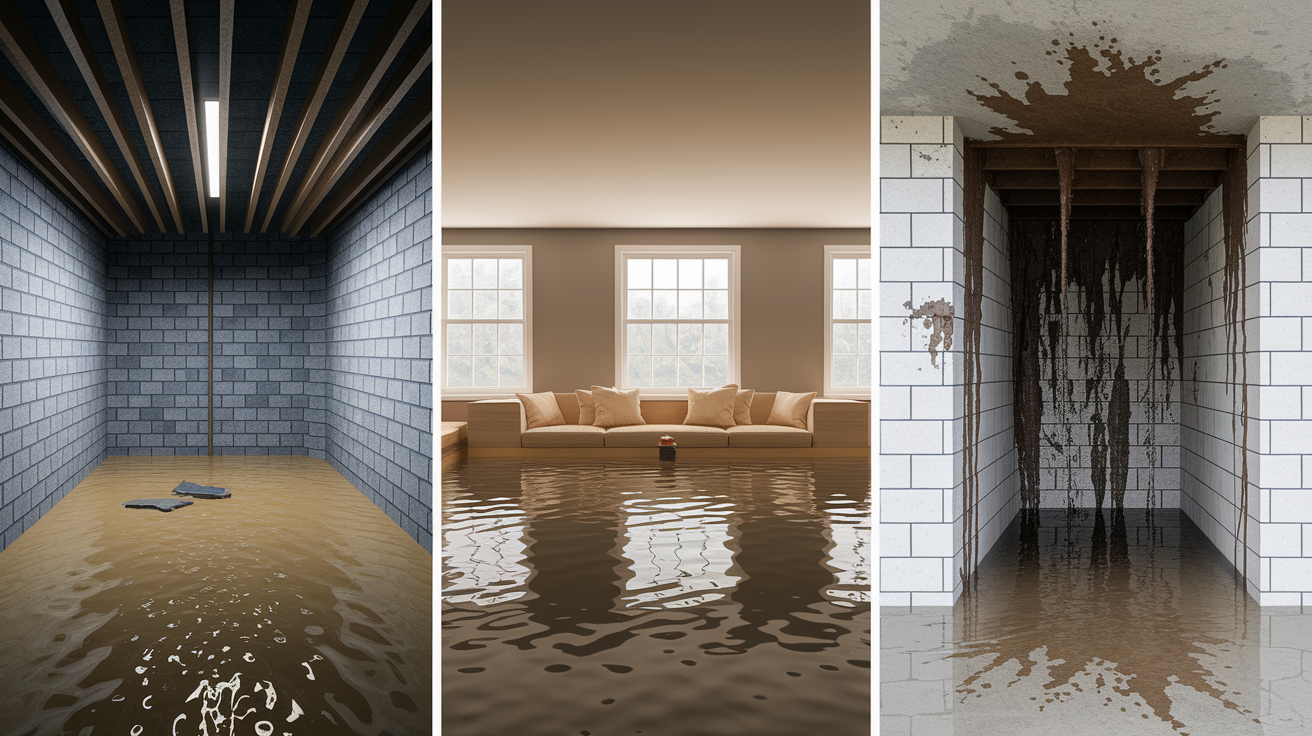
Real examples help you set realistic expectations for your specific situation rather than relying on broad timeline ranges.
Scenario 1: Minor Clean Water Leak (1 to 2 Inches of Water)
A water heater develops a slow leak overnight, creating 1 to 2 inches of standing water across 400 square feet of unfinished basement with painted concrete floors and concrete block walls. No carpet, no drywall, no finished surfaces. Water is clean (Category 1) with no contamination.
Timeline: 2 to 4 days total. Day 1 involves water extraction using a wet vacuum and shop vac, takes about 4 to 6 hours for this amount of water. Industrial dehumidifier and two air movers get placed and run continuously. Days 2 and 3 focus on drying, with moisture readings taken every 24 hours. By day 3 or 4, concrete reaches baseline moisture levels. Minimal repairs needed, maybe touch-up paint in a few spots. No material replacement. You’re using your basement normally again by day 4 or 5.
Scenario 2: Moderate Flooding in Finished Basement (4 to 8 Inches of Water)
Sump pump fails during heavy rain, allowing 6 inches of water to flood a 600 square foot finished basement with carpet, drywall on walls, and drop ceiling. Water is relatively clean but contains some ground contaminants (Category 1 to 2 gray water).
Timeline: 7 to 14 days total. Days 1 and 2 involve water extraction using pumps and industrial extractors. Six inches across this square footage takes most of 2 days to fully remove. Carpet and padding get pulled up since padding won’t salvage. Drywall gets flood-cut 12 inches above the waterline since it absorbed water and won’t dry properly. Days 3 through 7 run continuous dehumidification and air circulation on exposed studs, subfloor, and remaining materials. Moisture readings drop to acceptable levels by day 7. Days 8 through 14 involve reconstruction: new drywall installation, taping, mudding, sanding, priming, painting, new carpet padding and reinstallation of cleaned carpet, and baseboard replacement. You’re looking at the full 2-week timeline because of material replacement requirements.
Scenario 3: Major Sewage Backup or Deep Flooding (12+ Inches)
Main sewer line backs up, pushing 14 inches of sewage throughout an 800 square foot finished basement with carpet, drywall, wood paneling, and furniture. Water is heavily contaminated (Category 3 black water).
Timeline: 2 to 4 weeks total. Days 1 and 2 focus on water extraction and removal of all porous materials that contacted sewage. Everything goes. Carpet, padding, drywall up to 24 inches above water line, affected baseboards, any cardboard boxes or wood furniture that got wet. This is disposal work, not salvage. Days 3 through 10 involve intensive cleaning, sanitization, and drying. All remaining surfaces get treated with antimicrobial solutions. Dehumidifiers and air scrubbers with HEPA filters run continuously to remove airborne contaminants and dry exposed framing and concrete. Moisture readings get checked daily until they normalize. Days 11 through 21 cover full reconstruction: new insulation in affected wall cavities, complete drywall replacement, new carpet and padding throughout, baseboard and trim replacement, repainting, and potentially some plumbing repairs to prevent recurrence. For contamination this severe with this much material replacement, you’re realistically looking at 3 weeks minimum, potentially 4 if material orders take time or if mold remediation becomes necessary.
Common Delays That Extend Basement Flood Cleanup Beyond Expected Timelines

Even well-planned cleanups encounter obstacles that push timelines beyond initial estimates. Knowing what causes delays helps you plan realistically.
Hidden moisture discovery requiring extended drying happens when initial moisture readings look good on surfaces but thermal imaging reveals wet insulation or moisture trapped in wall cavities that needs more drying time. Mold growth requiring a separate remediation phase adds 3 to 7 days if you discover mold during drywall removal or behind paneling that wasn’t visible initially. Insurance approval delays or disputes over scope extend timelines when adjusters question damage extent, require second opinions, or need additional documentation before authorizing work. Material shortages or back-orders for specialty items like matching tile, discontinued carpet styles, or specific drywall types can delay reconstruction by 1 to 2 weeks. Discovery of underlying structural or plumbing damage that wasn’t visible until cleanup started requires additional repairs beyond flood cleanup and potentially engineering assessment. Permit requirements for extensive repairs or electrical work add several days in municipalities that require inspections before reconstruction can proceed. Seasonal high-demand periods affecting contractor availability stretch timelines when spring flooding or winter pipe bursts create backlogs at restoration companies.
Realistic planning should add a 20% to 30% buffer to estimated timelines. If your restoration company says 7 to 10 days, plan for 10 to 13 days. Transparent communication with your restoration company helps manage expectations when delays occur. Ask for updates every few days and specific explanations when timelines shift. Most delays are legitimate rather than contractor inefficiency, but knowing the reason helps you understand whether you’re dealing with a 2 day delay for material delivery or a 2 week extension for mold remediation that should have been caught earlier.
Final Words
So how long does basement flood cleanup take? You’re looking at anywhere from a few days for minor clean water incidents to several weeks for contaminated flooding with major damage.
The water type matters most. Clean water dries fast. Black water demands full decontamination and safety protocols.
Start water removal within 24 hours, document everything for insurance, and call pros early if you’re dealing with sewage, deep flooding, or visible mold.
Quick action cuts your timeline in half and keeps a manageable cleanup from turning into a full reconstruction project.
FAQ
How long should you stay out of your house after mold remediation?
You should stay out of your house for 24 to 48 hours after mold remediation to allow antimicrobial treatments to dry and air quality to normalize. Professionals will confirm safe re-entry using air quality tests and moisture readings before declaring the space habitable again.
How much does it cost to clean up a flooded basement?
Flooded basement cleanup costs range from $1,000 to $10,000 depending on water depth, contamination level, and damage extent. Clean water extraction with minimal repairs costs $1,000 to $4,000, while sewage backups requiring extensive decontamination and reconstruction can exceed $8,000 to $10,000.
Should I wear a mask while cleaning up a flooded basement?
You should wear an N95 mask while cleaning up a flooded basement to protect against mold spores, bacteria, and airborne contaminants. Add rubber gloves, boots, and eye protection for safety, especially if dealing with gray or black water from sewage or exterior flooding.
What should you do after a basement flood is cleared of water?
After basement flood water is cleared, immediately start drying with dehumidifiers and fans, remove wet materials like carpet padding, and sanitize all surfaces with antimicrobial solutions. Document damage with photos, monitor humidity levels, and ensure continuous air circulation for 3 to 7 days until moisture readings normalize.
How long does basement flood cleanup typically take?
Basement flood cleanup typically takes 3 to 7 days for minor clean water incidents and 2 to 4 weeks for major flooding or sewage contamination. Timeline depends on water depth, contamination category, affected materials, and whether you use professional restoration services or DIY methods.
What is the fastest way to dry out a flooded basement?
The fastest way to dry a flooded basement is using industrial dehumidifiers and air movers running 24 hours daily for 3 to 7 days while maintaining proper ventilation. Remove standing water immediately, pull wet carpet and padding, and use moisture meters to track progress until readings match unaffected areas.
Can you dry out a flooded basement yourself?
You can dry out a minor clean water basement flood yourself using rental dehumidifiers and fans if water depth was under 2 inches and no electrical systems were affected. Anything involving contaminated water, deeper flooding, visible mold, or structural concerns requires professional restoration for safety and thorough decontamination.
How quickly does mold grow after basement flooding?
Mold grows within 24 to 48 hours after basement flooding if moisture isn’t removed promptly. Start water extraction and drying immediately after shutting off electricity to stay within the safe window and prevent mold establishment that adds 3 to 7 extra days for separate remediation.
What materials need replacement after basement flooding?
Materials requiring replacement after basement flooding include water-soaked carpet padding, drywall with wicking damage above 2 feet, compressed insulation, and particle board or MDF that swells when wet. Tile, concrete, and solid wood can often be dried and salvaged if addressed within 48 hours.
Do insurance companies cover basement flood cleanup?
Insurance companies cover basement flood cleanup from sudden internal water events like burst pipes or water heater failures under standard homeowners policies. External flooding from heavy rain, rivers, or storm surge requires separate flood insurance, and sewage backups need specific endorsement coverage to be included.