

Ever notice how a tiny water stain on your ceiling somehow never stays tiny? Water doesn’t just sit still. It spreads through drywall like a slow-motion disaster, wicking into studs, insulation, and places you can’t see until something sags or smells wrong. The tricky part is that visible damage shows up way after the real problem started. If you catch the early signs, you’re looking at a simple patch and paint. Miss them, and you’re dealing with mold, soft walls, and repairs that cost serious money.
How to Identify Water Damage in Your Drywall

You can’t just look at your walls and call it good. Identifying water damage takes a multi-sensory approach using sight, smell, and touch. Some damage hides behind paint or in corners you don’t check often.
Catch it early and you prevent costly structural repairs, health hazards, and mold that can start growing within 24 hours. The faster you spot it, the less it spreads and the simpler the fix.
Visual Warning Signs
Watch for these indicators during your inspection:
Discoloration shows up as beige, brown, or yellow spots on lighter walls. Darker walls get sunken patches where moisture penetrates. Paint peels away in strips or sheets. Bubbling or blistering texture happens where moisture lifts the paint layer. Flaking paint crumbles when you touch it.
Warping makes walls bow outward or bend unnaturally. Swelling causes bulging that wasn’t there before. Sagging ceiling sections droop or feel heavy. Visible moisture appears as wet patches or water droplets. Dark streaks or drip patterns run vertically down walls.
Ceiling rings form in circular or oval shapes, usually brown or yellowish. Cracking shows sharp, jagged patterns instead of hairline settling cracks. Material crumbles and feels soft or breaks apart when pressed. Wall texture changes from smooth to rough or bumpy.
You might see joint compound loss at seams or tape separation at drywall edges. Black, green, or white spots mean mold growth already started.
Smell and Touch Tests
That musty odor is your first clue about hidden moisture. The damp basement smell or mildewy scent in a bathroom means moisture builds up somewhere, even when you can’t see it yet. These odors hit hardest in poorly ventilated basements and utility rooms where air doesn’t move well.
Mold starts growing in less than 24 hours after water shows up. It likes moist, dark places between 77 and 86 degrees. Closed up spaces with water damage develop that distinctive smell fast.
Run your hand across suspect walls and press gently. Healthy drywall feels firm and dry. Water damaged areas feel soft, spongy, damp, or unusually cool. Push a little harder on soft spots. If your finger leaves an indent or the surface gives way easily, that’s serious moisture penetration.
The paper towel test works when you’re not sure. Press a dry paper towel firmly against the wall for 30 seconds. Pull it away and check for dampness or discoloration. This catches hidden moisture your hand might miss.
Detection Tools for Hidden Moisture
Moisture meters from hardware stores run about $20 to $50 and give you real numbers. Pin type meters use two prongs that poke the surface slightly, measuring electrical resistance between them to calculate moisture content. They’re accurate but leave tiny holes.
Pinless moisture meters scan without causing damage. They use electromagnetic tech to read moisture levels up to three quarters of an inch deep. Hold the scanner flat against the wall and move it slowly across suspect areas.
Thermal imaging cameras detect temperature changes caused by moisture. Wet areas show up as different colors because water changes how surfaces hold and release heat. These cameras highlight wet spots and hidden leaks you can’t see, even in dim light. Rent them from tool shops if you don’t want to buy one.
Combine multiple methods for the best assessment. Eyes first, then touch test, then confirm with a moisture meter. If readings seem high but you can’t find the source, thermal imaging shows exactly where moisture travels behind walls and ceilings.
A single sign might mean a small problem you caught early. Multiple signs together indicate severity requiring faster action. Soft spots combined with sagging and musty odors plus visible staining represent advanced damage needing immediate attention. Don’t wait on those. Professional equipment provides more detailed readings for complex situations where moisture travels through multiple wall cavities or floor levels.
Root Causes and High-Risk Locations for Drywall Moisture
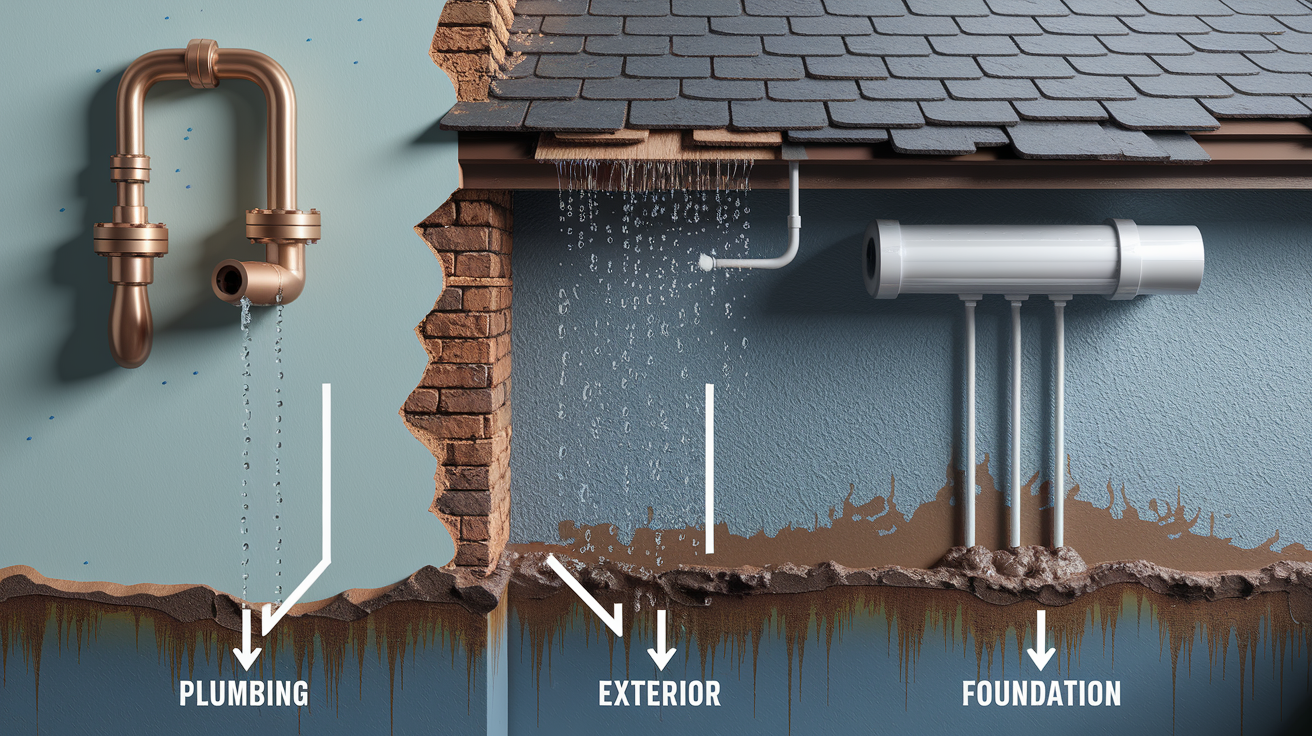
Find the water source before you start repairs or you’ll be fixing the same damage twice. You can patch and paint all day, but if water keeps coming from somewhere, the problem comes right back.
Plumbing and Fixture Failures
Leaking or burst pipes dump water directly into wall cavities where you can’t see it until damage appears. Rusty pipes develop pinhole leaks that drip steadily for weeks before you notice. Supply line failures at washing machines, dishwashers, and refrigerator ice makers spray water under pressure, soaking surrounding drywall fast.
Water heaters leak from the bottom when tanks corrode through. That water spreads across floors and wicks up into bottom wall sections.
Watch for sudden jumps or gradual increases in your water bill over a few months. That usually means a hidden pipe leak somewhere. Listen for water sounds when no appliances run. If you hear dripping, running, or hissing when everything’s turned off, there’s a leak somewhere in the home.
Exterior Water Intrusion
Roof leaks develop around chimneys, vents, and flashing where sealant breaks down. Missing or damaged shingles let rain penetrate through to attic spaces and ceiling drywall below. Clogged gutters overflow and dump water against exterior walls where it finds gaps around windows and doors.
Foundation problems like cracks or poor grading let groundwater seep into basements. Water follows the path of least resistance, traveling along foundation walls and soaking into bottom sections of drywall.
Ice dams in cold climates form when snow melts and refreezes at roof edges, forcing water up under shingles and into attics. That water drips onto insulation and ceiling drywall.
Environmental and HVAC Issues
Condensation from high humidity in poorly ventilated spaces leaves moisture on cold surfaces. That moisture absorbs into drywall gradually. HVAC systems leak from clogged drain lines, cracked condensate pans, or disconnected ductwork. Those drips often go unnoticed for months because equipment hides in closets, attics, or crawl spaces.
Poor ventilation in bathrooms and kitchens traps steam and moisture that settles on walls and ceilings. Over time, constant dampness breaks down paint and penetrates drywall. Seasonal moisture builds up in basements during humid summer months and in attics during winter when warm indoor air meets cold roof surfaces.
| Room/Area | Priority Inspection Points | Common Causes in This Location |
|---|---|---|
| Bathrooms | Around tubs, showers, toilets, under sinks | Leaking fixtures, poor ventilation, splashing water, failed caulk seals |
| Kitchens | Under sinks, behind dishwashers, near refrigerators | Supply line leaks, appliance failures, sink overflow |
| Laundry Rooms | Behind washers, around water supply valves | Hose failures, valve leaks, drain overflow |
| Basements | Floor-wall joints, around windows, behind water heaters | Foundation seepage, high humidity, condensation, equipment leaks |
| Attics | Under roof deck, around vents and chimneys | Roof leaks, ice dams, condensation from temperature differences |
| Window Frames | Sills, corners, surrounding drywall | Exterior water intrusion, failed weatherstripping, condensation |
| Door Frames | Thresholds, bottom corners, weather-exposed sides | Seal failures, poor flashing, ground splash-back |
| Baseboards and Corners | Floor-wall joints, inside corners, behind furniture | Hidden pipe leaks, foundation moisture, condensation |
Increase inspection frequency after heavy rainfall or natural disasters. New signs like bubbling paint or dark patches appearing after storms usually mean exterior water found a way inside. Some causes like in-wall pipe leaks or foundation seepage require professional leak detection services with specialized listening equipment or pressure testing.
Health Risks and Structural Dangers From Water-Damaged Drywall

Water damage creates a double threat hitting both your health and your home’s structure. Neither one’s worth ignoring.
Mold growth poses serious health risks including respiratory problems, allergic reactions, and complications especially for children, elderly, and people with compromised immune systems. People with allergies or asthma suffer respiratory issues when breathing air in spaces with mold. Symptoms include coughing, wheezing, throat irritation, nasal congestion, and skin rashes. Long term exposure makes existing conditions worse and can trigger new sensitivities in people who were previously fine.
Structural consequences from water damaged drywall include weakened integrity in walls and ceilings, collapse risk from sagging sections, and compromised load bearing capacity. Drywall absorbs water like a sponge, gaining weight and losing strength at the same time. That combination creates dangerous situations. Soft spots indicate the gypsum core broke down and can’t support itself anymore. Sagging ceilings show material so saturated it’s pulling away from fasteners, risking sudden collapse that could injure people or damage belongings below. Property values drop when structural damage goes unaddressed because it signals deferred maintenance and potential hidden problems.
Timeline matters with water damage. Mold growth begins in less than 24 hours after water exposure under the right conditions. One inch of water can stain walls, warp wood, and create perfect conditions for mold to establish colonies. Once it starts, it spreads fast through wall cavities where you can’t reach it without opening walls.
Immediate Response Steps After Finding Water Damage in Drywall

Quick action within the first 24 hours prevents mold and limits structural damage that spreads the longer water sits.
- Make sure it’s safe by removing children and pets from areas with standing water or visible damage
- Find and shut off the water source at the fixture, supply valve, or main line
- Turn off electricity at the breaker box only if the box sits in a dry part of the home
- Avoid contact with gray or black water from backed up sewers or contaminated sources due to biohazard risk
- Document damage with photos from multiple angles for insurance claims
- Remove standing water using towels, mops, or a wet-dry vacuum
- Ventilate the area by opening windows and doors to increase air circulation
- Set up dehumidifiers and fans pointing at wet surfaces to speed drying
Get wet materials out quickly before they become mold sources. Move furniture, rugs, and belongings away from affected areas. Pull up soaked carpeting if you can. Saturated insulation behind drywall needs to come out because it holds moisture and doesn’t dry well. Monitor moisture levels during drying using a moisture meter, checking readings every few hours. Typical drying time runs 24 to 72 hours depending on how much water got in and how much air circulation you provide.
| Damage Level | Characteristics | Water Exposure | Immediate Action Required |
|---|---|---|---|
| Minor Surface Damage | Surface staining, paint damage, but drywall core remains firm and structure intact | Brief exposure, surface moisture only | Dry thoroughly, monitor for 48 hours, repaint after confirming dryness |
| Moderate Penetration | 1 inch of water exposure creating visible staining, slight swelling, perfect mold conditions developing | Several hours to overnight saturation | Aggressive drying, possible section removal if swelling present, mold prevention treatment |
| Severe Structural Compromise | 1-2 inches of water causing soft spots, sagging, crumbling material, damaged insulation and electrical systems | Prolonged saturation, deep core penetration | Immediate professional assessment, likely full section replacement, electrical inspection required |
Single signs like minor staining might dry out and repaint fine. Multiple signs appearing together indicate more serious levels requiring faster response. Soft spots combined with sagging represent advanced damage needing immediate professional attention because structural failure could happen. Surface staining alone without texture changes or soft areas may be manageable with DIY drying and repainting methods.
When to Call a Professional vs DIY Drywall Water Damage Repair

Scope, safety risks, and required skills determine whether you can handle repairs yourself or need to hire help. Be honest about your skill level and the damage extent.
Professional restoration uses specialized equipment like commercial dehumidifiers, air movers, moisture mapping tech, and antimicrobial treatments that follow protocols beyond homeowner capability. They also know building codes and proper water damage restoration process sequencing to prevent secondary damage.
DIY-appropriate scenarios:
Small surface stains without structural damage, just cosmetic issues. Minor paint bubbling or peeling in limited areas you can easily reach. Localized dampness that dries completely within 24 to 48 hours on its own. Cosmetic repairs like painting and touch up after professionals extract water. Preventive sealing and maintenance tasks around fixtures and vulnerable areas. Small drywall patches under 8 inches where you’re cutting out and replacing damaged sections.
Professional-required situations:
Mold growth of any significant size because working around it requires special training and protective equipment per mold remediation safety standards. Structural damage showing soft spots, sagging sections, or crumbling material. Electrical system exposure to water requiring licensed electrician evaluation before energizing circuits. Category 2 or 3 water contamination from sewage backups, toilet overflows, or exterior flooding bringing biohazards. Damage affecting multiple rooms or floors where water traveled through building cavities. Insurance claim situations requiring documentation, restoration timelines, and professional invoicing. Hidden moisture behind walls or ceilings that needs opening up to access and treat properly.
Repair and Replacement Costs for Water-Damaged Drywall

Costs vary quite a bit based on damage extent, location accessibility, and whether you’re just fixing drywall or also addressing the underlying cause.
| Repair Type | Typical Cost Range | Timeline |
|---|---|---|
| Drywall-Only Repair | $300 to $850 | 1 to 3 days including drying time |
| Drywall Plus Painting | $500 to $1,200 | 3 to 5 days with paint curing |
| Burst Pipe Repair | $1,000 to $4,000 | 1 to 2 days for plumbing, additional time for drywall |
| Plumbing Replacement | $350 to $2,000 | Varies by scope and accessibility |
| Mold Removal | Around $2,225 | 2 to 5 days depending on containment needs |
| Comprehensive Water Damage Restoration | $1,307 to $5,912 (average $3,594) | 5 to 14 days for complete mitigation and repairs |
Several factors affect final cost beyond base repair rates. Square footage of damaged area drives material and labor needs. Accessibility matters because repairs behind finished basements or in cramped attics take longer. Material quality choices like standard versus mold resistant drywall change pricing. Local labor rates vary by region. Required permits for plumbing or electrical work add fees.
Most homeowners spend around $550 for standard drywall repairs covering average sized damaged sections with basic finishing and paint matching. That assumes the water source is already fixed and no mold treatment’s needed.
Insurance coverage considerations depend on your policy deductible, coverage limits, and whether the water damage came from a sudden event versus gradual leak. Document everything with photos, save receipts, and get written estimates before starting work. Some policies require using approved contractors. Address the source problem completely during repairs to prevent recurrence that wastes money fixing the same damage repeatedly.
Preventing Future Water Damage in Your Drywall

Prevention costs way less than repairs and protects your property value from the hit that comes with water damage history. A $5 tube of caulk applied in time prevents a $500 drywall repair. Regular inspections let you spot rust on pipes, worn washers in fixtures, and deteriorating roof flashing while fixes are still simple.
Monthly prevention tasks:
Check visible plumbing under sinks, behind toilets, and at water heater connections for leaks, corrosion, or moisture. Monitor water bills for unexpected increases that signal hidden leaks somewhere. Inspect high moisture areas including bathrooms, kitchens, and laundry rooms for early warning signs.
Seasonal prevention tasks:
Clean gutters and downspouts minimum twice yearly, more often if you have overhanging trees. Check roof for missing or damaged shingles after major storms. Test and maintain dehumidifiers to make sure they’re working when you need them most.
Annual prevention tasks:
Schedule professional roof inspection to catch deterioration before leaks develop. Have plumbing system comprehensively checked including supply lines, drain lines, and fixtures. Inspect and reseal exterior wall cracks that let water penetrate during rain. Verify proper grading around foundation slopes away from the house at minimum 6 inches drop over 10 feet. Check and replace worn caulk in bathrooms and kitchens where water exposure is constant.
Humidity control through proper ventilation and dehumidifiers in moisture prone rooms keeps condensation from building up on surfaces. Run bathroom exhaust fans during showers and for 20 minutes after. Keep basement humidity below 60 percent to prevent condensation on cool surfaces. Consistent monitoring creates an early warning system so you catch problems at the “small stain” stage instead of the “soft sagging ceiling” stage.
Final Words
Catching the signs of water damage in drywall early makes all the difference between a simple patch and a major repair bill.
Stains, soft spots, peeling paint, and musty smells are your drywall’s way of asking for help before things get worse.
Once you spot the warning signs, act fast. Shut off the source, dry everything out, and decide whether it’s a DIY fix or time to call a pro.
Regular checks in bathrooms, kitchens, and basements keep small problems from turning into big ones.
FAQ
How do you know if there is water damage behind drywall?
You know there is water damage behind drywall by checking for visual signs like discoloration, peeling paint, or bulging walls, detecting musty odors, pressing the wall for soft or spongy spots, or using a moisture meter to find hidden dampness.
Does drywall get ruined if it gets wet?
Drywall gets ruined if it gets wet depending on the saturation level and duration. Surface dampness may dry without damage, but absorbed moisture causes warping, crumbling, and creates mold conditions within 24 hours, requiring replacement.
What are the first signs of mold in walls?
The first signs of mold in walls include a persistent musty odor, especially in poorly ventilated areas, followed by visible black, green, or white spots on surfaces. Damp or soft wall sections often indicate mold-friendly conditions developing.
How long can drywall be wet before mold?
Drywall can be wet for less than 24 hours before mold starts growing. Mold thrives in temperatures between 77 and 86 degrees Fahrenheit in dark, moist conditions, making quick drying and ventilation critical after water exposure.
What tools help detect hidden water damage in drywall?
Tools that help detect hidden water damage in drywall include pin-type moisture meters that penetrate surfaces for precise readings, pinless meters that scan without damage, and thermal imaging cameras that reveal temperature variations and trapped moisture invisible to eyes.
What causes water damage in drywall?
Water damage in drywall is caused by plumbing failures like burst or leaking pipes, roof leaks, clogged gutters, foundation problems, HVAC condensation, high humidity, and ice dams in cold climates. Sudden water bill increases often indicate hidden leaks.
Where should you check for drywall water damage first?
You should check for drywall water damage first in bathrooms near plumbing fixtures, kitchens around sinks and appliances, laundry rooms with supply lines, basements with foundation exposure, attics under the roof, and around window and door frames.
What health risks does water-damaged drywall create?
Water-damaged drywall creates health risks including respiratory problems, allergic reactions, and mold exposure hazards. Children, elderly individuals, and those with compromised immune systems face heightened risks from mold growth starting within 24 hours of water exposure.
What are immediate steps after finding water damage in drywall?
Immediate steps after finding water damage in drywall include removing children and pets, shutting off the water source, turning off electricity if safe, documenting damage with photographs, removing standing water, ventilating the area, and deploying dehumidifiers and fans.
When should you call a professional for water-damaged drywall?
You should call a professional for water-damaged drywall when mold is present, structural damage like sagging or soft spots appears, electrical systems are exposed to water, contaminated gray or black water is involved, or damage affects multiple rooms.
How much does water-damaged drywall repair cost?
Water-damaged drywall repair costs range from $300 to $850 for drywall-only fixes, with most homeowners spending around $550. Comprehensive water damage restoration averages $3,594, ranging between $1,307 and $5,912 depending on severity and underlying cause.
How can you prevent water damage in drywall?
You can prevent water damage in drywall by checking plumbing monthly for leaks, cleaning gutters twice yearly, scheduling annual roof inspections, maintaining proper ventilation in bathrooms and basements, using dehumidifiers in moisture-prone areas, and sealing exterior cracks.