

Ever noticed water dripping from your gutters where it shouldn’t? That small leak can rot your fascia, crack your foundation, and flood your basement before you realize the damage is spreading. Most gutter leaks show obvious signs from ground level during or right after rain. You don’t need special tools or a ladder to spot the warning signs. Catching them early stops minor drips from turning into structural nightmares that cost thousands to fix.
Identifying Gutter Leaks: What to Look For and Your Next Steps

Most gutter leak signs show up from ground level during or right after rain. You don’t need a ladder or special tools to spot the common warning signs. Catching them early stops minor issues from turning into structural headaches.
Here’s what to watch for:
- Chalky white streaks right under gutter seams
- Water spilling over edges in specific spots instead of heading to downspouts
- Peeling paint on exterior walls near gutters
- Dark vertical stains or rusty streaks on siding
- Water dripping between gutter and fascia
- Visible streams during rain coming from joints
- Discoloration on walls below gutters
- Mildew or dark streaks running down from gutter areas
The best inspection time is during moderate to heavy rain when flow patterns are obvious. You’ll see exactly where water escapes instead of channeling to downspouts. Some signs stick around after things dry out, so you can spot staining, paint damage, and chalky residue without getting soaked.
Understanding urgency helps you respond the right way. MINOR stuff includes isolated drips at one or two seams, small stains, occasional overflow at one spot. These are usually DIY fixable within days using gutter sealant. MODERATE problems mean multiple leak points, visible fascia moisture, consistent overflow, paint damage spreading. These need attention within a week and might require pro assessment to figure out if you need section repair or complete resealing. SEVERE situations include sagging sections, interior water damage, foundation pooling, extensive rot. Get pros out within 24 to 48 hours to prevent structural damage that’ll escalate costs fast.
| If You See This | Action Level | Typical Solution | Timeline |
|---|---|---|---|
| Single drip point or small seam leak | DIY Repair | Gutter sealant application | This weekend |
| Multiple leaks or moderate staining | Professional Assessment | Possible section repair or resealing | Within 1 week |
| Sagging gutters, interior damage, or foundation water | Emergency Professional | Section replacement or full system evaluation | Within 24-48 hours |
External Signs: Siding, Paint, and Wall Deterioration
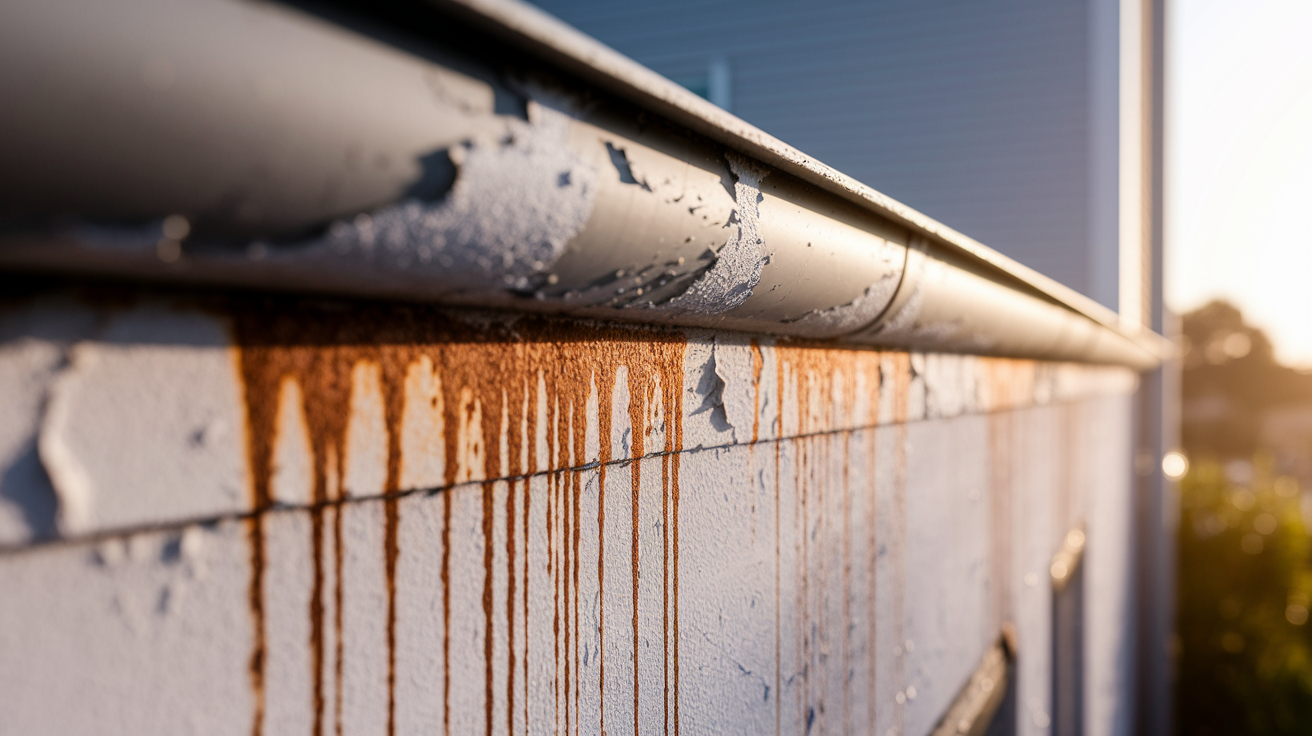
Paint peeling, bubbling, or flaking right below gutters is a dead giveaway. Trapped moisture messes with paint adhesion and creates distinctive damage in gutter-adjacent areas. It doesn’t appear randomly. It shows up beneath problem spots. You might see small blisters that crack and peel away, exposing bare wood or primer. The damage follows the gutter line, often concentrated below seams or joints where leaks start.
Siding problems include bulging, warping, discoloration, dark streaking, chalky residue beneath seams. Rust-colored tannin stains appear when gutters stay clogged and overflow repeatedly. These look like rusty water ran down your siding during multiple storms. Mildew grows in patterns that follow water flow from leaking gutters, creating dark fuzzy patches that spread. Chalky white or gray lines appear directly beneath seams where runoff, dirt, and minerals seep through cracks and dry over and over. Vinyl siding might buckle or pull away. Wood siding can warp into waves or split along grain lines.
Fascia and soffit deterioration includes soft spots when pressed, visible rot, dark discoloration, separation from the roofline, splitting wood. These are advanced signs needing immediate attention. Water’s penetrated behind the gutter system and is actively rotting the structural wood holding your gutters in place. The fascia might feel spongy instead of solid when you push from below. Dark brown or black staining means prolonged moisture exposure. In bad cases, pieces of fascia separate from the house entirely, leaving gaps where gutters pull away.
The typical progression starts with staining. Then paint damage develops. Siding warps. Finally wood rot hits fascia boards. Early intervention at the staining stage prevents expensive carpentry. Once you’re replacing rotted fascia, you’re looking at hundreds or thousands beyond just fixing gutters. Catching problems when you first notice discoloration or minor paint bubbling saves serious money and structural damage.
Ground and Foundation Water Indicators

Failed gutters redirect water wrong, causing surface and foundation problems that show up on ground level and inside your home’s lowest spaces. Water that should travel through downspouts away from your house instead dumps onto soil and seeps toward the foundation.
Perpetually soggy areas near the foundation that don’t dry between storms indicate gutter failure at specific points. You’ll notice muddy patches when everything else has dried after heavy rain. Pooling patterns near the perimeter during and after storms show exactly where gutters dump water instead of channeling it away. These wet spots typically appear right beneath leaking seams or where downspouts disconnect. Soil feels saturated when you walk on it, sometimes making squishy sounds days after rain stops.
Landscape damage includes erosion channels, displaced mulch, exposed plant roots, worn grass paths directly below gutter lines, settlement patterns in walkways or driveways next to the house. Deep grooves carve into mulch beds where water pours from the same gutter location. Grass wears away in lines beneath overflow points, creating bare dirt paths. Plant roots become visible when soil washes away repeatedly. Concrete walkways or asphalt can crack or settle near foundations when soil underneath shifts from constant saturation and erosion. These aren’t just cosmetic issues. They’re visible proof water’s concentrating where it shouldn’t.
The connection to basement and crawl space symptoms includes musty odors, visible moisture on walls, efflorescence (white mineral deposits looking chalky or crystalline), increased humidity, standing water appearing during or after storms. When gutters fail to direct water away from foundations, it finds its way inside. You’ll smell damp, earthy odors even when the basement looks dry. Moisture appears on concrete walls, sometimes as dampness and other times as actual water streaks. White powdery deposits form where minerals in groundwater evaporate on basement walls. A dehumidifier that used to keep up suddenly runs constantly. In severe cases, water pools on basement floors during heavy rain, appearing near walls or through floor cracks.
Foundation water exposure escalates quickly from minor to severe structural concerns requiring both gutter repair and foundation waterproofing. What starts as a damp smell becomes standing water, then foundation cracks, basement flooding, potential structural settling. Fix gutters first to stop water reaching the foundation, then address any foundation damage that’s already occurred.
Gutter Damage Types and Root Causes
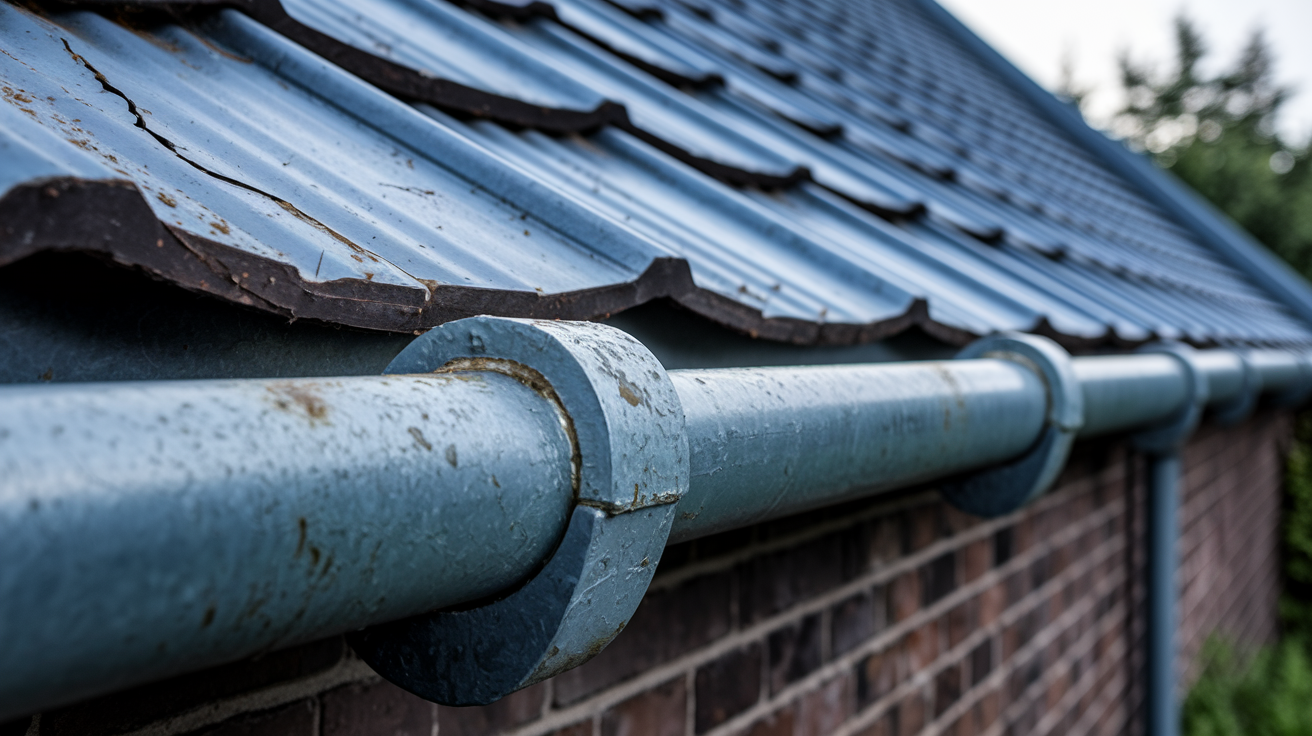
Gutter structural integrity relates directly to leak development. Understanding both damage and causes helps determine repair versus replacement decisions. Sometimes fixing one problem makes sense. Other times, system-wide deterioration means replacement is smarter long term.
Physical damage to watch for:
- Sagging or bowing sections no longer sloping toward downspouts
- Visible separation between gutters and fascia with gaps
- Cracks along seams or at corner joints
- Rust spots, holes, corroded areas on metal gutters
- Loose or missing hangers and brackets causing misalignment
- Sections pulling away from the house creating water flow behind the gutter
- Failed end caps letting water pour from gutter ends
- Visible sealant deterioration at joints appearing cracked or missing
Structural damage both causes and results from leaks. A small crack lets water through, which freezes and expands the crack larger. A loose hanger creates a low spot where water pools, adding weight that pulls more hangers loose. Multiple problems often indicate system-wide failure rather than isolated issues. Understanding why damage occurred prevents repeat problems after repairs. If you fix a seam leak but don’t address the clog that caused water to back up and stress that seam, you’ll be fixing it again soon.
What causes gutters to fail:
Clogged gutters cause water backup, weight stress, overflow that finds weak points in seams and joints. Wet debris weighs way more than empty gutters are designed to hold. That extra weight pulls on hangers and stresses every connection.
Deteriorated sealant at seams and joints from age, UV exposure, temperature cycling. Sealants dry out and crack over 10 to 15 years of sun and expanding-contracting through temperature changes.
Separated or loose hangers create improper slope, stress concentration points, progressive misalignment. When one hanger fails, adjacent ones carry extra load and fail faster.
Thermal expansion and contraction opens gaps in joints, particularly in extreme temperature swings. Metal gutters expand in summer heat and contract in winter cold. Over years, this movement separates sealed joints.
Corrosion and rust eat through metal where protective coatings have failed. Once rust starts, it spreads. Small rust spots become holes within a few years.
Impact damage from falling branches, ladder placement, ice dam formation. Physical impacts dent gutters and crack joints even if damage doesn’t seem severe initially.
Poor initial installation with inadequate fastening, incorrect pitch, improper spacing of support brackets. Gutters need to slope consistently toward downspouts. If they’re installed flat or backwards, water doesn’t flow right.
Weather impact including freeze-thaw cycles, ice dams, heavy snow load, severe storms accelerates deterioration. Water freezes in small cracks and expands them larger. Ice dams force water backwards under shingles and behind gutters. Heavy wet snow can pull entire sections off the house. Multiple factors often combine to create leak situations rather than a single cause.
Interior Damage Indicators Linked to Gutter Leaks

Exterior gutter leaks at the roofline show up as interior problems through water infiltration paths traveling along rafters and through insulation. Water doesn’t just stay outside where you can see it. It finds ways into wall cavities and attic spaces where damage progresses hidden until it becomes severe.
Attic and ceiling problems include water stains in upper-floor room corners, especially closets, pantries, or spaces at the building’s edge. You’ll see damp or compressed insulation that looks matted down instead of fluffy. Ceiling discoloration appears in distinctive corner patterns, starting small and spreading over multiple rain events. Moisture on rafters near the roofline edge where gutters attach feels damp or shows dark water stains. Musty odors in upper floors indicate hidden moisture that might not be visible yet. Stains often appear brown or yellowish, sometimes with darker rings showing repeated wetting and drying.
The connection pathway works like this. Leaking gutters let water behind the fascia, which wicks into roof decking and travels along rafters into attic spaces. Corner rooms show symptoms first because they’re directly adjacent to gutter attachment points where leaks develop. Water follows the path of least resistance, running along wooden structural members until it drips onto insulation or ceiling drywall. Interior ceiling damage represents advanced deterioration requiring both gutter repair and potential roof or ceiling restoration. You’re not just fixing gutters at this point. You might need roof decking replacement, new insulation, ceiling patching or replacement.
Window and Door Frame Damage From Leaking Gutters

Window symptoms include staining on frames, warped or swollen sills, condensation between panes, difficulty operating windows, peeling paint on trim, water pooling on interior ledges. The window sill might feel soft instead of solid when you press on it. Wood sills can cup or bow upward from moisture absorption. Paint bubbles and peels around trim in patterns matching where water runs down from above. Windows that used to open smoothly stick or bind because frames have swollen from moisture. Water droplets appear on interior ledges during or after rain even with the window closed. Condensation trapped between double-pane glass means seal failure, often caused by frame deterioration letting moisture penetrate the window assembly.
Door frame issues include swollen wood causing sticking doors, rotted threshold boards, water stains on interior door trim, deteriorating weatherstripping no longer sealing properly. Exterior doors suddenly become hard to close or require forcing because frames have swollen from water absorption. The threshold, that board at the bottom, can rot through and feel spongy underfoot. Interior trim around doors shows water staining or paint damage even though the door itself looks fine. Weatherstripping peels away or tears more easily because moisture’s degraded the adhesive or rubber material.
These problems often appear on walls directly beneath gutter joints or overflow points. If you’ve noticed window or door issues, step outside and look at the gutter system right above that area. You’ll usually find a leak source there. Frame damage represents advanced deterioration requiring both gutter repair and carpentry work. By the time windows stick or door thresholds rot, water’s been penetrating for months or years.
How to Inspect Your Gutters for Leak Sources

Identifying exact leak locations helps determine whether DIY fixes or professional service is needed. A targeted repair at one seam is a weekend project. Widespread problems throughout the system mean calling for help.
Ground-Level Visual Inspection During Rain
Watch water flow during rainfall from a safe distance, noting overflow points, dripping between sections, unusual water streams. Stand back from the house far enough to see the entire gutter length without standing directly beneath potential leaks. Look for water spilling over edges instead of flowing toward downspouts. Watch for drips appearing between sections or at corner joints. Notice any water streams that shouldn’t exist, like water pouring from mid-gutter locations instead of controlled flow to downspouts. Use binoculars for closer viewing without climbing. You can spot seam separation, rust holes, sealant failure from ground level with decent binoculars during moderate rain.
Close-Up Dry Inspection From a Ladder
Proper ladder positioning means placing it on level, solid ground at the correct angle (base one foot away for every four feet of height) and extending at least three feet above the gutter line. Once safely positioned, check for cracks, separated seams, rust-through holes, loose fasteners, sealant deterioration along the entire gutter length. Run your hand along seams to feel for gaps or rough edges indicating sealant failure. Look inside gutters for rust spots that might become holes soon. Check that hangers are tight and properly spaced. Look for any sections pulling away from the fascia.
Garden Hose Water Test
Run water through gutters section by section while a helper watches from below to pinpoint exact leak locations. This method’s especially useful for finding small cracks or failed seals that don’t show obvious symptoms. Start at the end farthest from the downspout. Place the hose inside the gutter and turn water on to moderate flow, not full blast. Walk along with the hose as your helper below calls out any drips or streams. Mark each leak location with chalk or tape. Work your way toward the downspout, testing each section thoroughly.
Know your personal limits and take ladder safety seriously. If you’re uncomfortable on ladders, if your home is multi-story, or if you have a steep roof, call for professional inspection. A $100 to $200 inspection beats a hospital visit from a ladder fall.
DIY Repairs for Minor Gutter Leaks

Minor seam leaks, small cracks under 3 inches, loose end caps are suitable for DIY repair. Multiple leak points, sagging sections, extensive rust, or damage requiring carpentry work needs professional service. You’re looking at simple sealing and patching jobs that don’t require specialized tools or expertise.
Sealing Small Cracks and Seam Leaks
Clean the area thoroughly using a wire brush to remove debris, old sealant, any rust or corrosion. Dry completely. This step matters more than people think. Even slight dampness prevents proper adhesion. Apply waterproof gutter sealant or silicone caulk designed specifically for exterior use and metal surfaces. Smooth the application with a putty knife or your finger (wearing a glove) to create an even seal without gaps or air bubbles. Allow proper cure time before testing, typically 24 to 48 hours depending on product and weather. Work in dry weather above 50°F for proper adhesion. Below that temperature, most sealants won’t cure correctly.
Patching Holes with Repair Kits
Use metal or fiberglass patch kits from hardware stores. Surface prep is critical. Wire brush any rust until you reach clean metal, then clean with acetone or rubbing alcohol to remove oils and residue. Cut patch material to size, extending at least one inch beyond the hole in all directions. Apply adhesive according to kit directions, usually a layer on both the gutter surface and the patch itself. Press firmly to eliminate air bubbles. Seal edges with gutter sealant to prevent water from working underneath the patch. Let everything cure fully before exposing to water.
| Repair Type | Materials Needed | Typical Cost |
|---|---|---|
| Seam leaks | Gutter sealant, wire brush, cleaning supplies | $10-20 |
| Small cracks | Silicone caulk, prep tools, sealant | $15-25 |
| Holes under 2 inches | Patch kit, adhesive, sealant, acetone | $20-40 |
| End cap reattachment | New end cap, gutter sealant | $8-15 |
When Gutter Leaks Require Professional Repair

Extensive damage, multiple leak points, structural problems exceed DIY capabilities and risk making things worse. Improper repairs can trap moisture instead of redirecting it, creating bigger problems than you started with. Small misalignments redirect water incorrectly even if the leak is sealed. When you’re dealing with system-wide issues rather than isolated problems, professional expertise becomes necessary.
System replacement versus repair decisions depend on extent and pattern of damage. A few isolated leaks in an otherwise sound system make sense to repair. Widespread rust, multiple sagging sections, leaks throughout the system mean replacement is smarter long term. Seamless gutters are a long-term solution eliminating most seam leak problems by reducing joints from dozens to just a few corner connections and end caps. Custom-fit gutter guards installed during replacement keep debris out year-round and reduce future maintenance dramatically.
Call professionals when you see:
- Leaks at multiple locations throughout the system
- Significant sagging or structural misalignment affecting proper water flow
- Extensive rust or corrosion beyond simple patching
- Fascia board rot requiring carpentry before gutter repair can happen
- Complete section replacement needed rather than patching
- Homes requiring specialized equipment or safety rigging for access
Minor professional repairs typically run $100 to $300 per section for straightforward fixes like resealing multiple seams or replacing short damaged sections. Partial replacement costs $500 to $1,500 depending on how much gutter needs replacing and material choices. Full system replacement ranges from $1,000 to $5,000 or more depending on home size, gutter material quality, whether you’re adding features like gutter guards. Emergency repairs during active damage cost more than scheduled maintenance because you’re paying for immediate response and potentially working in difficult conditions.
Preventing Future Gutter Leaks Through Maintenance

Preventive maintenance is the most cost-effective approach to avoiding gutter leaks and associated damage. Regular attention catches small problems before they escalate into expensive repairs involving carpentry, foundation work, interior restoration.
Follow these maintenance tasks:
Clean gutters and downspouts twice yearly in spring and fall to remove debris and prevent clogs. This single task prevents the majority of gutter problems. Schedule it for after trees finish dropping leaves in fall and after spring pollen season.
Inspect sealants and joints annually for early signs of deterioration like cracks, gaps, areas where sealant’s pulled away from metal. Catching separation early means a $5 tube of sealant fixes it instead of a $300 repair bill later.
Check gutter slope and alignment after severe weather including heavy snow, ice storms, high winds. Impacts you didn’t notice can shift gutters just enough to create drainage problems.
Trim overhanging tree branches to reduce leaf accumulation and impact damage. Branches scraping against gutters during wind slowly abrade protective coatings and create leak-prone weak spots.
Install quality gutter guards to minimize debris entry and reduce cleaning frequency. Good guards pay for themselves in reduced maintenance time and extended gutter lifespan by preventing clogs that stress seams and joints.
Regular maintenance catches small problems before they become major leaks. A loose hanger noticed during annual inspection takes 5 minutes to tighten. That same loose hanger ignored for three years lets a gutter section sag, creating a pooling spot that stresses seams until they separate and leak. Document gutter condition with photos for insurance purposes and tracking deterioration patterns. Take pictures from the same spots each year so you can compare and spot gradual changes that aren’t obvious day-to-day. Maintenance costs are minimal compared to water damage repair expenses. An afternoon twice a year prevents thousands in damage to siding, foundations, basements, interior spaces.
Final Words
Check for signs your gutters are leaking during the next moderate rain. Watch for overflow, wall staining, or drip marks between sections.
Catch problems at the staining stage and you’ll skip expensive carpentry repairs. Minor seam leaks and small cracks are usually DIY-fixable with sealant and a dry afternoon.
But if you’re seeing sagging, multiple leak points, or fascia rot, get a pro out soon.
Clean gutters twice a year, check seals annually, and you’ll prevent most leaks before they start. A little maintenance now beats foundation problems later.
FAQ
How do you know if your gutters are leaking?
You know your gutters are leaking when you observe water spilling over gutter edges during rain, chalky white streaks beneath seams, peeling paint near gutters, dark stains on siding, dripping between the gutter and fascia, or persistent wet soil around your foundation.
What is the average cost to repair gutters?
The average cost to repair gutters ranges from $100 to $300 for minor professional seam repairs, $500 to $1,500 for partial section replacement, and $1,000 to $5,000 or more for complete system replacement depending on your home’s size and material choices.
What’s the average lifespan of gutters?
The average lifespan of gutters varies by material: aluminum gutters typically last 20 years, steel gutters 15-20 years, and copper gutters 50 years or more. Proper maintenance and climate conditions significantly affect longevity, with neglected systems failing much sooner.
How long can a roof leak go unnoticed?
A roof leak from failed gutters can go unnoticed for weeks or months until interior ceiling stains appear in upper-floor room corners, attic insulation becomes visibly damp, or musty odors develop, by which time water damage has already progressed significantly.
Can I repair gutter leaks myself?
You can repair gutter leaks yourself when dealing with single seam drips, small cracks under two inches, or loose end caps using waterproof gutter sealant or patch kits, but multiple leaks, sagging sections, or fascia rot require professional assessment and carpentry skills.
How often should gutters be cleaned?
Gutters should be cleaned at minimum twice yearly in spring and fall to remove debris and prevent clogs, with additional cleanings needed if you have overhanging trees or after severe weather events that deposit leaves, twigs, or other material into the system.
What causes gutter seams to leak?
Gutter seams leak when sealant deteriorates from age, UV exposure, and temperature cycling, or when debris-caused clogs create water backup that finds weak points, thermal expansion opens gaps, or loose hangers create stress concentration at joints causing progressive separation.
How can I tell if my fascia board is rotting from gutter leaks?
You can tell your fascia board is rotting from gutter leaks when the wood feels soft when pressed, shows dark discoloration, separates from the roofline, splits visibly, or when you notice water dripping behind the gutter rather than through proper channels.
Do gutter guards prevent leaks?
Gutter guards prevent leaks indirectly by keeping debris out, which eliminates clogs that cause water backup, weight stress on seams, and overflow problems. They reduce the maintenance frequency needed but don’t fix existing structural problems or deteriorated sealants in aging systems.
What’s the difference between repairing and replacing gutters?
The difference between repairing and replacing gutters is that repairs address isolated problems like single seam leaks or small holes using sealants and patches, while replacement involves installing new sections or complete systems when multiple failures, extensive rust, or structural sagging make repairs ineffective.