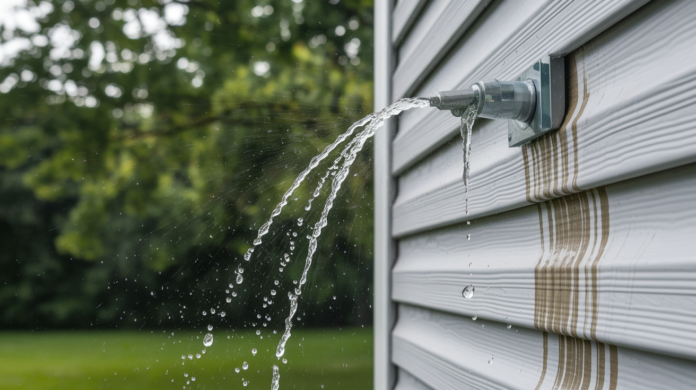

You probably didn’t think a dripping downspout connection could damage your foundation, rot your siding, or turn your basement into a swamp. But that’s exactly what happens when water sprays out from behind your gutters instead of flowing down and away from your house. Most downspout leaks start at the drop box where your gutter meets the downspout opening, and they’re caused by bent metal, missing sealant, or connections that have simply worked themselves loose over time. The good news? Most of these leaks are fixable in an afternoon with basic tools and the right sealant.
Diagnosing Your Leaking Downspout Connections

The drop box, where your gutter meets the downspout opening, is where most leaks happen. This connection carries the full force of roof runoff during rain, and when it fails, you’ll see water spraying out from behind the gutter or dripping down the siding instead of flowing neatly into the downspout. Look for visible streams coming from behind the gutters during rain, wet siding directly below the connection point, or water dripping from seams at the elbow joints where the downspout attaches to the gutter outlet.
Overflow pouring over the gutter edge usually means you’ve got a clog somewhere downstream. Lateral leaking from the connection itself, where water escapes through gaps and runs down the exterior wall, signals actual damage or separation at the joint.
Visual symptoms confirming downspout connection leaks:
- Water spraying horizontally from behind the gutter during rain, not flowing into the downspout
- Dripping or steady stream at the seam where downspout elbow meets the gutter outlet
- Wet streaks on siding starting directly below the connection point
- Visible gaps or separation between the downspout components and outlet
- Water running down the back of the gutter instead of into the downspout opening
- Rust stains or mineral deposits around connection seams indicating repeated water exposure
Once you’ve confirmed the leak is at the connection and not just overflow from a clog, figure out whether you can repair what’s there or need to replace damaged components. Check if the metal is bent, cracked, or just separated at sealed joints.
Common Causes of Downspout Connection Failures

Physical damage from cleaning methods causes more connection leaks than you’d think. When people try to clear clogs by forcing sticks, broom handles, or screwdrivers down from the top of the downspout, they bend the thin metal at the drop box and elbow joints. That bending creates gaps where sections no longer fit together properly. Water finds those gaps immediately. The drop box is especially vulnerable because it’s a transition point with multiple seams that can’t handle the stress of something being jammed through.
Material degradation happens naturally over time as your gutter system expands and contracts with temperature changes. Metal components shift slightly with each hot summer day and cold winter night. Freeze/thaw cycles are particularly hard on connections because trapped water expands when it freezes, pushing joints apart. After years of this constant movement, even well installed connections develop tiny cracks in the metal or gaps in the seams. Aluminum and vinyl react differently to temperature changes, and when they’re mixed in the same connection, that mismatch speeds up joint failure.
Installation problems often don’t show up immediately but reveal themselves within a few years. Missing sealant at critical seams, fasteners driven through the wrong part of the component, or incompatible materials between metal and vinyl sections all lead to premature leaks. Some installers skip the sealant step entirely on downspout elbows, assuming the crimped fit will be watertight. It’s not. Others use sheet metal screws that create holes instead of pop rivets that don’t penetrate all the way through. When metal and vinyl components are forced together without proper adapter fittings, the connection never seals correctly because the materials don’t mate flush.
Age and weathering break down even properly installed connections eventually. UV exposure from direct sunlight makes vinyl brittle and degrades rubber gaskets. Oxidation pits the surface of aluminum and galvanized steel, creating rough spots where water can penetrate. Caulking compounds dry out and crack after 5 to 20 years, depending on sun exposure and climate. If your gutters are approaching 15 years old and the original sealant has never been refreshed, connection leaks are almost inevitable.
Improper gutter slope creates water pressure that connections weren’t designed to handle. Gutters should slope about 1/4 inch per 10 feet of run toward the downspout. When the slope is too shallow or backwards, water pools instead of draining. That standing water increases hydrostatic pressure at the outlet connection, pushing against seams with constant force instead of just flowing past during rain. You’ll notice this problem if water stands in your gutters after rain stops, if the gutter overflows during moderate rainfall when the downspout isn’t even full, or if one section of gutter always seems wetter than others. Poor slope doesn’t just cause leaks. It accelerates every other failure mode by keeping connections constantly wet instead of allowing them to dry between storms. Fix the slope and many connection problems resolve themselves because the joints aren’t under constant stress anymore.
Tools and Materials Needed for Downspout Leak Repair

Match your sealant and fastener types to whatever material your existing gutter system is made from. Silicone sealant works on all gutter materials but costs more. Polyurethane sealant is the best choice for metal to metal connections. Do not use acrylic latex caulk on gutters. It fails quickly when constantly exposed to water. For fasteners, aluminum pop rivets work on aluminum gutters, and stainless steel screws or rivets are necessary for galvanized steel to prevent galvanic corrosion. Vinyl systems usually use sheet metal screws that bite into the material without splitting it.
You need basic safety equipment regardless of repair type. Use a sturdy extension ladder rated for your weight plus materials, position it on firm ground, and maintain three points of contact when climbing. Wear work gloves to protect against sharp metal edges and safety glasses because old sealant and metal debris can flake into your eyes when you’re scraping connections clean overhead.
| Repair Type | Tools Needed | Materials Needed |
|---|---|---|
| Sealing only | Wire brush, putty knife, caulk gun, rag | Gutter sealant (1 tube), rubbing alcohol, drop cloth |
| Fastener replacement | Drill, 1/8″ bit, pop rivet tool, screwdriver | Pop rivets or screws (6-12), sealant, washers if needed |
| Elbow replacement | Tin snips, drill, measuring tape, marker | Replacement elbow (match size and material), sealant, 8-10 fasteners, adapter if changing materials |
| Complete connection rebuild | All above tools, level, crimping tool if available | Drop outlet, elbow sections, straps, sealant (2 tubes), fasteners (20-30), drip edge flashing if missing |
Step by Step Repair Process for Leaking Connections

Work on a dry day after at least 24 hours without rain. Moisture trapped in seams prevents sealant from bonding properly, and you can’t see the full extent of damage when everything’s wet. Clean, dry surfaces are necessary for repairs that actually last.
-
Remove all debris from the gutter and downspout opening. Use your hands or a small scoop. Pull out leaves, shingle grit, and anything stuck in the outlet. Flush the downspout with a garden hose from the top to confirm it’s not clogged. If water backs up, you need to clear the clog first before repairing any connections.
-
Assess the damage severity at each connection point. Look for bent metal that can be straightened versus cracked metal that can’t. Check if components are simply disconnected or if the metal is torn. Small gaps and loose fasteners are straightforward repairs. Badly bent drop boxes or cracked elbows need replacement because they won’t seal reliably even after repair.
-
Clean all connection surfaces completely using a wire brush. Scrape away old sealant, rust, oxidation, and dirt until you see clean metal or vinyl. Wipe surfaces with rubbing alcohol on a rag to remove any oily residue that would prevent new sealant from sticking. Let everything dry completely, at least 30 minutes.
-
Allow surfaces to dry thoroughly if any moisture remains. Touch the metal or vinyl with your bare hand. If it feels cool or damp, wait longer. Even slight moisture will cause sealant to bubble or peel within weeks.
-
Apply a continuous bead of gutter sealant to all seam surfaces before reassembling components. For drop box repairs, run sealant around the inside edge where the outlet meets the gutter bottom. For elbow connections, apply sealant to the inside of the upper piece that will slide over the lower piece. Use enough that you see a small amount squeeze out when you press parts together, but not so much it drips into the downspout opening.
-
Reassemble components and secure with appropriate fasteners. Push parts together firmly so sealant spreads into gaps. If using pop rivets, drill through both layers at once with a 1/8 inch bit, then insert the rivet and squeeze the tool until the mandrel pops off. Space fasteners every 3 to 4 inches around connection perimeters. For crimped connections, make sure the upper piece overlaps the lower by at least 1 inch before fastening.
-
Allow full cure time before testing. Most gutter sealants need 24 to 48 hours to cure completely. Check the tube for specific timing. Don’t let rain hit the repair during cure time. If weather looks threatening, cover the repair area loosely with plastic sheeting held away from wet sealant with cardboard spacers.
-
Test the repair with a garden hose before the next rainfall. Run water into the gutter upstream of your repair at a moderate flow rate for 10 minutes. Watch the connection closely for any drips or seepage. Check inside the downspout to confirm water flows freely without backing up. If you see leaks during testing, you caught them early and can add more sealant before it becomes an emergency during a real storm.
After testing, watch the repair during the first few actual rainstorms. Sometimes leaks only show up under the higher flow rates of real weather. If the connection still leaks after proper repair, you’ve either got a clog you missed or damage that’s worse than it looked.
Troubleshooting Common Repair Failures
Repairs fail when you don’t give sealant adequate cure time before exposing it to water. Forty eight hours means 48 hours, not “it looks dry so probably fine.” Incompatible materials also cause problems. Silicone doesn’t stick to polyurethane, and acrylic latex breaks down in constant water exposure. If you’re adding new sealant over old sealant, they must be the same type, or you need to remove all the old material first.
Surface preparation matters more than people think. If the metal wasn’t actually dry, if you left oily residue, or if you didn’t remove loose rust, the sealant forms a skin on top but never really bonds. It’ll peel away in sheets within a month. Insufficient sealant coverage is another issue. Tiny gaps that you can barely see will leak under pressure, so don’t be stingy with the bead. Fasteners that don’t actually secure both pieces together leave components able to shift and break the seal during thermal expansion.
Unaddressed clogs cause continued pressure that blows out even good repairs. Check for clogs in three places: right at the outlet, in the downspout elbows, and in underground drains if you have them. Verifying proper gutter slope is essential for long term success. If water still pools at the repaired connection because the gutter runs backwards, you’ll be repairing the same spot again next year. Confirm all connection points are sealed, not just the obvious leak spot. Water takes the easiest path, and sometimes that means leaking from a different unsealed seam once you fix the first one. Make sure you used compatible materials. Metal rivets in vinyl crack the vinyl. Aluminum fasteners in galvanized steel cause corrosion. Vinyl elbows on metal outlets need adapter boots to seal properly.
Temporary Fixes for Emergency Downspout Leaks

Use temporary fixes when a storm is approaching and you can’t complete a proper repair before rain arrives, when you’re missing specific materials or components and stores are closed, or when it’s late on a weekend and you need to stop water damage until you can work on it properly. Quick fixes buy you time but won’t hold up for months.
Temporary methods that work for days or weeks:
- Waterproof repair tape (the rubberized kind for gutters): Clean and dry the surface, wrap the tape around the leaking seam with at least 2 inches of overlap on each side, press firmly to activate adhesive. Works for maybe 2 to 4 weeks if applied correctly.
- Temporary silicone sealant: Squeeze a thick bead over the leak from the outside without disassembling anything. It won’t bond well over dirt and moisture, but it’ll slow the leak for a few days.
- Heavy plastic sheeting: Wrap the connection area completely and secure with duct tape or zip ties. Looks terrible but redirects water for a week or so.
- Repositioning the downspout: Sometimes you can temporarily angle an elbow to direct water away from the house even if it’s leaking, preventing immediate foundation damage.
- Bucket placement: Put a bucket or splash block below the leak to catch and redirect water. Not a repair, just damage control.
Temporary solutions won’t last more than a few weeks to a couple months maximum, and that’s if you’re lucky with weather. The tape peels, the quick sealant washes away, the plastic tears. These fixes work for emergency response but fail under repeated rain cycles. Schedule permanent repair within 2 to 4 weeks to prevent water damage from getting worse. Every day that leak continues, water is running down your siding, soaking into your foundation, or pooling against your basement wall. What starts as an annoying drip becomes a costly structural problem when you let it slide for months because the temporary fix “seems to be holding okay.”
Making the Right Repair Decision: Replace vs. Repair vs. Professional Help

Your decision depends on how extensive the damage is, what repairs cost versus replacement, whether the work is safe for you to do, and how technically complex the fix becomes. A single leaking seam on an accessible first floor gutter is straightforward. Multiple failing connections on a two story home with fascia damage means you’re looking at a bigger project.
When to Repair vs. Replace Components
Damage assessment tells you which direction to go. Surface issues like failed sealant, loose fasteners, and small gaps respond well to cleaning, resealing, and adding proper fasteners. You’re looking at maybe 2 hours of work and $15 to $40 in materials. Minor cracks less than an inch long in otherwise sound metal can be sealed and reinforced. Single connection point failures where everything else looks good are clear repair candidates.
Badly bent or cracked drop boxes need replacement, not repair. Once the metal is kinked or torn, you can’t seal it reliably no matter how much sealant you use. It’ll leak again within months. Crushed or severely dented elbows are the same. The metal’s structural integrity is gone, and water will always find a path through. Multiple failing connections across your gutter system suggest underlying problems like improper slope, chronic clogs, or system age. Repairing one connection when three others are about to fail just means you’ll be up on the ladder three more times this year.
Component age matters for replacement decisions. If your gutters are 15 to 20 years old and original sealants are failing in multiple places, replacing damaged sections makes more sense than endless repairs. You’re not just fixing today’s leak, you’re preventing next month’s. Cost comparison helps with the decision. A DIY repair with sealant and fasteners costs $15 to $40. Replacing a damaged section with new components runs $50 to $150 depending on material and length. A full system upgrade to seamless gutters with proper slope starts around $4 to $6 per linear foot professionally installed, but eliminates the ongoing repair cycle.
Specific guidance: Minor cracks and loose fasteners are clearly repairable with proper technique and materials. Badly bent or cracked drop boxes where metal is torn or kinked need replacement. Multiple failing connections within a 20 foot span indicate system level problems like slope issues that repair alone won’t fix.
DIY Capability Assessment
Good candidates for DIY include single story homes where ladder work stays under 12 feet, isolated connection issues that don’t indicate widespread system failure, basic sealing and fastening repairs that don’t require specialized skills, clear access to the repair area without obstacles or steep roof angles, moderate physical ability to work overhead for 30 to 60 minutes at a stretch, and comfort with ladder work and basic hand tools.
Call a professional when you’re dealing with two story or higher homes where falls become seriously dangerous, multiple failing connections that suggest you need system evaluation beyond just fixing leaks, underlying slope problems that require precise angle adjustment and remounting, fascia damage where the wood is rotted and the gutter mounting is compromised, situations where structural mounting is questionable and you’re not sure if the fascia will hold, specialized tools needed like professional crimpers and rivet guns that cost more than hiring help, building permit requirements in some areas for gutter work, or any safety concerns about ladder placement, roof pitch, or overhead utility lines.
You know your limits better than anyone. If you’re reading repair steps and thinking “I have no idea how to do that safely,” then this isn’t your DIY project. There’s no shame in recognizing when professional help is the smart move. One emergency room visit costs more than five years of gutter repairs.
Professional Contractor Selection
Get quotes from at least 2 to 3 licensed contractors for comparison. Prices vary significantly, and you want to understand what’s included versus what’s extra. Ask specifically about warranty coverage on both labor and materials. A reputable contractor offers at least a 1 year warranty on their installation work, often longer. Material warranties vary by manufacturer but typically run 10 to 20 years on aluminum components.
Questions to ask include: What type of sealant do you use and why? (Listen for specific product names, not just “the good stuff.”) How do you handle slope corrections if needed? Will you replace damaged fascia or just work around it? What’s included in the quoted price versus what costs extra? How long until you can start the work? What does your warranty cover and for how long?
Warranty value for professional repairs matters more than you think. When your repair fails after two months because you missed something, you’re back up on the ladder doing it again. When a professional’s repair fails, they come back and fix it at no charge. That peace of mind has real value, especially on two story homes where you’re not eager to climb up there repeatedly.
| Damage Type | Repair Viable | Replace Recommended | Reason |
|---|---|---|---|
| Failed sealant at seams | Yes | No | Simple reseal with proper surface prep works reliably |
| Loose or missing fasteners | Yes | Only if holes stripped | Add proper rivets or screws unless metal is damaged |
| Bent or kinked drop box | Minor bends only | Yes for severe damage | Kinked metal won’t seal properly long term |
| Cracked or torn metal | No | Yes | Cracks will continue spreading and cannot be reliably sealed |
| Multiple connection failures | No | Yes | Indicates system wide issues requiring section or full replacement |
Making the decision based on total cost of ownership includes potential water damage from failed DIY attempts. A $200 professional repair seems expensive until you compare it to $3,000 of foundation work because water kept leaking for another year while you kept resealing the same joint every few months. Sometimes the cheapest option is not the cheapest option.
Preventing Future Downspout Connection Leaks

Prevention costs less than emergency repairs and way less than water damage repair. Spending two hours twice a year on gutter maintenance prevents spending $500 on repairs and potential thousands on foundation or siding damage. Most downspout connection leaks are preventable with basic maintenance that keeps water flowing properly and catches small problems before they become actual leaks.
Clean your gutters properly without damaging connections. Work from the top down, removing debris by hand or with a small scoop. Never force sticks, broom handles, or other rigid tools down into the downspout from above. That’s how people bend the drop box and create the leaks you’re trying to prevent. If you have a clog in the downspout, flush from the bottom with a garden hose or use a plumber’s snake from the top, both of which follow the path instead of forcing through it. When flushing from the top, let water build up naturally until pressure clears the clog rather than jamming anything down to “help it along.”
Seasonal maintenance checklist for downspout connections:
- Spring (after trees bud): Clear winter debris, check all connection seams for winter damage from ice, flush downspouts to confirm they’re clear, look for loose fasteners from freeze/thaw cycles, verify gutter slope hasn’t changed
- Early summer: Inspect sealant for cracks or gaps from UV exposure, tighten any loose mounting brackets, check that downspout elbows are still firmly attached
- Fall (after leaves drop): Major debris cleaning, remove all organic material from connections before winter, seal any small cracks before they freeze, add straps if downspouts feel loose
- Late fall (before freeze): Final check that all water drains completely without pooling, disconnect extension hoses in freezing climates, confirm underground drains are clear
- After major storms: Quick visual check for new leaks or separated connections, clear any debris blown into gutters
- Annual detailed inspection: Check inside condition of drop box for rust or cracks, verify all fasteners are secure, measure gutter slope if you suspect drainage problems, refresh sealant at connections showing wear
Schedule professional inspection annually if you have mature trees dropping heavy debris, if you’re in an area with severe weather like hurricane zones or heavy snow, if your home is two stories or higher and you’re not comfortable doing thorough inspection yourself, or if you’re over 60 and ladder work is becoming riskier. A professional inspection costs $75 to $150 and catches expensive problems while they’re still cheap to fix.
Recognizing and Addressing Secondary Water Damage

Water damage from leaking downspout connections follows a predictable progression, starting with cosmetic issues and getting worse when left unaddressed. It begins with staining on siding directly below the leak, usually within a few weeks of the connection failing. Next comes paint failure and wood softening if you have wood siding, typically within a few months of repeated wetting. Then you see fascia board damage where the gutter attaches, soil erosion at the foundation, and water stains in the basement or on foundation walls. Eventually, foundation cracks develop from repeated saturation cycles, and basement water infiltration becomes a chronic problem requiring expensive waterproofing. The timeline depends on climate and rainfall frequency, but the progression is consistent.
Damage inspection checklist for areas around leaking connections:
- Siding inspection: Look for dark stains, paint bubbling or peeling, soft spots in wood siding when you press with your thumb, white mineral deposits on brick or stone, and mildew or mold growth in the pattern of water runoff
- Fascia board check: Press the wood where the gutter attaches to test for soft, spongy areas indicating rot, look for visible sagging or pulling away from the house, check for dark staining on the underside, and note if fasteners are pulling out because the wood has degraded
- Foundation and soil: Look for soil erosion directly below the leak creating a depression or channel, splash patterns on the foundation wall, efflorescence (white mineral deposits) on the foundation, and new cracks or widening of existing cracks near the area
- Basement or crawlspace: Check interior foundation walls for water stains, damp spots, or moisture at the section nearest the leak, look for mold growth or musty odor, and note if you see any water during or shortly after rain
- Landscaping: Check for erosion channels, mulch washing away, exposed plant roots, or plants showing stress from too much water
Take immediate steps even before completing gutter repair. Redirect water temporarily with splash blocks, plastic sheeting, or even a bucket to keep it away from the foundation. Dry affected areas as much as possible, especially wood components, using fans or dehumidifiers if basement moisture is present. Apply temporary leak repair to reduce ongoing water exposure until permanent fix is possible. Cut back soil grading if water is pooling against the foundation, creating a temporary slope away from the house.
Call specialists beyond just gutter repair when you see foundation cracks wider than 1/4 inch or actively growing, if there’s basement water infiltration requiring sump pumps or dehumidifiers, when fascia boards are rotted and need structural repair before remounting gutters, if mold growth is visible inside the home or basement (health hazard requiring professional remediation), or if siding damage is extensive and requires sections replaced. A foundation specialist costs more than fixing the gutter, but catching foundation problems early prevents catastrophic settling issues later. Mold remediation is not a DIY project if it’s beyond surface mildew. If it smells musty or you see black growth, call professionals with proper safety equipment.
Cost and Time Estimates for Downspout Repairs

Several factors affect what you’ll pay and how long repairs take. Damage extent is the big one: sealing one seam costs less than replacing multiple components. Material type matters because aluminum is cheaper than copper, vinyl is easier to work with than steel, and custom bent elbows cost more than standard angles. Accessibility changes everything. A leak you can reach from a 6 foot ladder takes half the time of one requiring scaffolding or extension ladder repositioning. The number of connection points needing work obviously multiplies both cost and time.
Warranty considerations make professional repairs more valuable than the price difference suggests. When you DIY and the repair fails, you buy more materials and spend another afternoon fixing it again. Professional repairs typically come with 1 to 5 years of warranty on the labor, meaning they return and fix failures at no cost. Material warranties are longer, often 10 to 20 years, but only apply if the installation was done correctly. That warranty value is worth calculating when you’re comparing a $50 DIY repair to a $150 professional repair. Over five years, if your DIY repair fails twice and the professional repair holds, the professional option saved you money and four afternoons on a ladder.
| Repair Scenario | DIY Cost | DIY Time | Professional Cost | Pro Time |
|---|---|---|---|---|
| Simple reseal (one connection) | $15-$25 | 1-2 hours | $75-$125 | 30-45 minutes |
| Fastener replacement (6-10 rivets) | $25-$40 | 1.5-2.5 hours | $100-$150 | 45 minutes-1 hour |
| Elbow replacement (single section) | $40-$80 | 2-3 hours | $125-$200 | 1-1.5 hours |
| Multiple connection rebuild (3-4 points) | $100-$200 | 4-6 hours | $300-$500 | 2-3 hours |
Final Words
A downspout connection leaking isn’t just annoying—it’s actively pushing water toward your foundation and siding every time it rains.
The good news? Most connection failures come down to loose fasteners, worn sealant, or a bent drop box. You can handle those with basic tools and an afternoon.
Clean the surfaces, let everything dry completely, use the right sealant for your gutter material, and give it time to cure before the next storm rolls in.
If you catch it early and fix it right, you’re looking at years of reliable drainage instead of water creeping where it doesn’t belong.
FAQ
How do you fix a leaking downspout joint?
To fix a leaking downspout joint, clean and dry the connection completely, apply gutter-specific silicone sealant around the joint seam, secure with appropriate fasteners like pop rivets or sheet metal screws if needed, and allow 24-48 hours cure time before testing with water.
Is it normal for gutters to leak on the downspout screws?
It is not normal for gutters to leak at downspout screws. Leaking at screw locations indicates either missing or failed sealant around the fastener holes, loose connections allowing water to escape, or improper installation without adequate sealing during original assembly.
How do you fix a leaky downpipe joint?
To fix a leaky downpipe joint, remove debris and clean both surfaces thoroughly, ensure complete drying, apply waterproof sealant designed for gutter materials around the connection, tighten or replace fasteners securing the joint, and test with garden hose after proper cure time.
What is the best sealant for leaking gutter joints?
The best sealant for leaking gutter joints is 100% silicone or polyurethane gutter sealant specifically formulated for outdoor metal or vinyl applications. Match the sealant chemistry to your gutter material, choose products rated for UV resistance and temperature fluctuation, and expect 5-20 year lifespan under normal conditions.
How long does gutter sealant take to dry before rain?
Gutter sealant typically requires 24-48 hours to cure sufficiently before rain exposure. Surface dry time occurs within 1-6 hours depending on temperature and humidity, but full waterproof cure takes longer. Check product-specific instructions and avoid scheduling repairs immediately before predicted rainfall.
Can you repair downspout connections yourself?
You can repair downspout connections yourself if damage involves minor sealing or fastener replacement, you have safe ladder access, and connections are on single-story sections. Two-story heights, multiple failing connections, underlying slope problems, or structural mounting issues typically require professional help for safety and proper diagnosis.
When should you replace instead of repair a downspout connection?
You should replace instead of repair a downspout connection when the drop box or elbow is badly bent or cracked, multiple connection points fail simultaneously indicating system-level problems, metal shows significant rust-through or corrosion, or previous repairs have failed within one season.
How often should you inspect downspout connections?
You should inspect downspout connections twice yearly in spring and fall, after major storms, and whenever you clean gutters. Look for visible separation, water staining on siding below connections, loose fasteners, caulking cracks, and rust spots indicating early failure before leaks cause damage.